Tech Gadgets Most Likely to Make Your Phone Feel Outdated in 2026
Last updated: 16 August 2026.
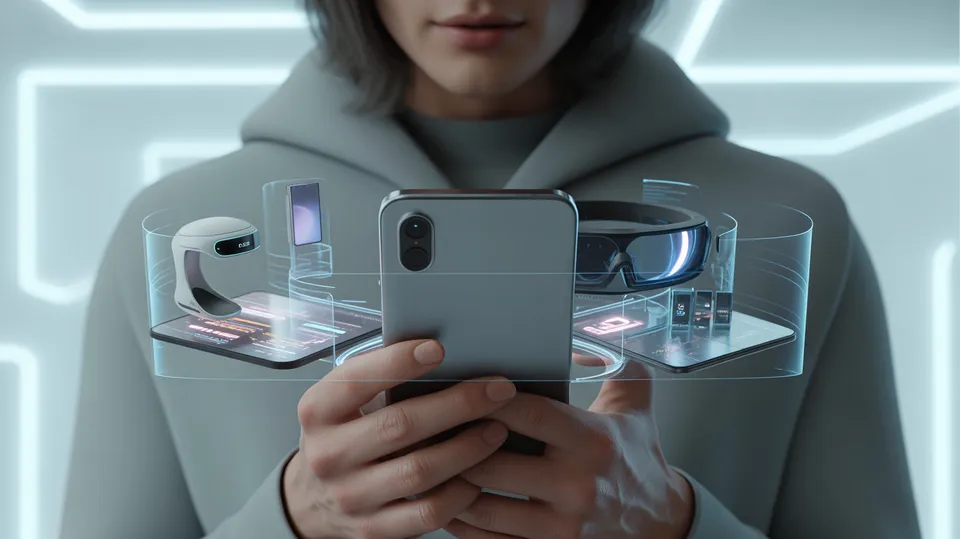
Remember when a flashy new smartphone launch could suddenly make your old phone feel ancient? Buckle up, because 2026 is delivering that vibe on steroids. The tech world is exploding with AI-powered wonders, next-gen smart devices, and future tech gadgets that charge in a flash, beam info into your view, and seamlessly integrate into daily life. Your current handset might soon feel like a relic from the flip-phone era. We’re not just talking simple upgrades — we’re talking a total rethink of what personal tech means.
In this revamped guide, we'll break down why 2026 smartphones and gadgets are starting to edge out traditional phones. From AI-first devices that read your mind (almost) to satellite-linked gear and immersive wearables, we’ve got fresh updates from the latest launches and expert buzz. Backed by real-world insights from CES 2026 and recent product rollouts, you’ll get the lowdown on innovations worth watching, how they’re making phones feel dated, and tips to ride this wave without getting left behind.
So grab a coffee (in a smart mug, perhaps?) and let’s journey into the near future. Spoiler alert: It’s closer than you think, and it’s going to be awesome.
The smartphones of 2026 aren't just faster; they're fundamentally smarter. Below, we unpack the biggest leaps hitting shelves this year and why they're game-changers for your everyday grind:
On-Device AI Assistants and “AI-First” Phones
Your phone is getting a brain upgrade — not one that lives in the cloud, but one humming right in your pocket. Welcome to the era of the AI-first phone, where your digital sidekick isn’t just a separate app; it’s baked into the core of the device. Big players are all in. Carriers like T-Mobile are touting top AI-capable flagships as personal concierges, doing things like booking rides via Uber, translating conversations in real time (100+ languages), and managing your schedule hands-free with always-on voice or a quick button press.
This isn’t a niche trend anymore – every major brand is cranking up the AI dial. Samsung’s upcoming Galaxy S26 series (Unpacked February 25, 2026) builds on its “Galaxy AI,” powered by Google’s upgraded Gemini model and custom NPUs, targeting over 800 million AI-enabled units by year’s end (up from ~400 million in 2025). These phones can chat about the photos you just snapped (“How do I care for this succulent?”) or generate custom travel itineraries on the fly. Google’s Pixel 10 series (already out) leads with on-device multimodal AI that processes voice, images, and text simultaneously for ultra-responsive interactions.
Why the hype? On-device AI means instant, private responses that feel human-like. Picture this: you squeeze a side button and say, “Grab me tickets for the concert tonight,” and your phone immediately scouts deals, checks your calendar, and books it – all offline if needed. Or imagine switching languages mid-conversation, with AI translating and even replying in your own voice. These new AI agents juggle apps and tasks behind the scenes, turning your phone into a proactive partner rather than just a tool you poke at.
Apple’s catching up too — iOS 26 (rolling out late 2025 into 2026) brings a revamped Siri that’s better at hopping between apps and handing off tasks across devices (start on your iPhone, finish on your Vision Pro headset). Even emerging wearables are joining the party; compact models like Meta’s Llama 3 are optimized for phones, running powerhouse AI features without draining your data plan or compromising privacy.
Fast Fact: Samsung’s TM Roh expects AI adoption to skyrocket, with consumer awareness of “Galaxy AI” features jumping from 30% to 80% in one year[1]. In other words, by the time you’re holding a 2026 phone, you’ll wonder how you lived without an AI genie inside it — making older devices feel like relics from a pre-smart era.
Battery Breakthroughs: Silicon-Carbon, Stacked Cells & Super Charging
Battery woes? History. After years of so-so improvements, 2026 is unleashing battery tech that keeps you powered longer and gets you juiced up in minutes. Here’s a quick rundown of breakthroughs making “low battery” a forgotten phrase:
- Silicon-Carbon Anodes: By ditching old graphite anodes for silicon-carbon mixes, batteries are packing way more punch. Honor’s Magic series (like the V5/Magic 7) uses up to 25% silicon in razor-thin cells (as slim as 2.3 mm) holding 6,100 mAh – delivering 35+ hours of mixed use in sleek foldables. TIME’s 2025 Best Inventions list spotlighted Honor’s silicon-carbon tech for busting past traditional lithium-ion limits. Expect flagships like the upcoming iPhone 18 and many mid-rangers to widely adopt this in 2026, banishing midday battery anxiety with extended runtimes — no more lunchtime hunts for an outlet.
- Stacked & Multi-Cell Designs: Smarter internals are also key. Samsung’s advanced battery stacking (pioneered in its foldables) layers cells like an electric vehicle battery pack, eliminating wasted space. Rumors for the Galaxy Z Fold 8 suggest around 5,000 mAh in a compact form via this tech. Prototypes (like tri-fold concept phones shown at recent events) explore multi-cell setups for even better efficiency. The result? Thinner phones and/or marathon battery life — perfect for all-day productivity or binge-watching, without carrying a brick in your pocket.
- Super-Fast Charging: 120W chargers are becoming mainstream in 2026, with 240W–320W demos hinting at the future. Forget overnight charging — that’s quaint. Realme showed off 320W prototype charging that can fill a small battery in ~4 minutes. Current flagship phones like the Realme GT 7 Pro already top up a big 6,500 mAh battery in ~35 minutes with a 120W charger (about 50% in 13 minutes). Many mainstream models (OnePlus, etc.) offer 150–200W charging standard, often with safety features like vapor-cooling to keep temperatures in check. A quick 5-minute plug-in now often gets you 50–60% battery – ideal for those rushed mornings. (Tip: use the phone’s proprietary fast charger for peak speeds, but even a “slow” 100W blast leaves 2020s chargers in the dust.)
- Solid-State Sneak Peeks: Solid-state batteries are on the horizon. Early uses in wearables (Samsung is exploring them for the Galaxy Ring 2) tease fireproof, higher-density power. We might see the first phone prototypes by end of 2026 using solid-state cells, promising ~50% more capacity and zero explosion risk if all goes well.
Bottom line: 2026 devices can run all day and then recharge during a coffee break. Battery Win: Honor’s slim silicon-carbon battery beast already lasts 35+ hours (earning TIME’s kudos for smashing lithium-ion limits), proving thinner, longer-lasting tech is here. Share this with your always-plugged-in friends — they’ll thank you (and maybe finally upgrade their phone).
Next-Gen Connectivity: Wi-Fi 7, Satellite Links, and 5G’s Second Act
In 2026, staying connected means never really being offline — whether you’re deep in the mountains, at a packed stadium, or streaming 8K video at home. Three massive upgrades are converging to deliver fiber-like performance everywhere you go:
- Blazing Wi-Fi 7 Everywhere: Wi-Fi 7 (802.11be) is hitting its stride in 2026. Shipments of Wi-Fi 7 routers and access points are exploding (projected at over 117 million units, according to ABI Research). Premium flagships like the upcoming Galaxy S26, the current Pixel 10, and the expected iPhone 18 all pack full Wi-Fi 7 radios. Theoretical speeds reach up to 46 Gbps, but the real-world magic is in the details: ultra-wide 320 MHz channels, multi-link operation (using 5 GHz and 6 GHz bands at the same time), and latency as low as 1 ms. In practical terms, that means downloading a 4K movie in seconds, enjoying lag-free cloud gaming or VR streaming, and connecting dozens of smart home devices without a hiccup. The new Wi-Fi Certified 7 program (expanded in 2026 to even cover 20 MHz IoT gadgets) brings these core speed/latency benefits to everything from your laptop to your smart fridge. If you’ve already upgraded your home router, a 2026 phone will finally unleash that multi-gig wireless bliss — no more buffering or fighting for bandwidth with older devices.
- Satellite Links Go Mainstream: Early satellite texting (like Apple’s emergency SOS) was just the start. In 2026, direct satellite-to-phone connectivity is expanding in a big way. T-Mobile’s partnership with SpaceX’s Starlink (live since mid-2025) now offers basic nationwide coverage for texting, location sharing, emergency 911 texts, and even limited app data (think WhatsApp or Maps) on regular, unmodified phones like the Pixel 10. AT&T and Verizon are teaming with AST SpaceMobile to enable intermittent satellite service from early 2026, aiming for continuous coverage by year’s end – with real broadband potential. (Early AST tests hit 10–20 Mbps downloads, and they even demoed a VoLTE call and video streaming from space.) The upcoming Galaxy S26 is expected to double down on these satellite features. Hiking in remote mountains or road-tripping off-grid? Your phone can stay reachable without any special gear. It’s peace-of-mind tech for outages, wilderness adventures, or emergency situations. Bandwidth is still limited for now (no full-on Netflix binges in the desert yet), but critical communications are becoming orbit-powered – making older phones feel uncomfortably isolated in the wild.
- 5G’s Second Act (5G-Advanced): The 5G hype from a few years ago is finally delivering on its promises. 3GPP Release 18 (finalized in 2024) and later Release 19 are powering features in carriers’ 5G-Advanced rollouts. For example, T-Mobile’s nationwide 5G Advanced network (launched April 2025) is accelerating in 2026 with better coverage, higher speeds, and smarter network optimizations. What to expect? Improved signal range (fewer dead zones), multi-gigabit peak speeds in more places, AI/ML-driven network optimization for consistent performance, enhanced positioning (phones can locate things down to a few centimeters – great for finding lost keys), more reliable connections in crowded areas (think concerts or sports events), expanded sidelink tech for direct phone-to-phone connections, and new low-power modes to make wearables and IoT devices sip less battery on 5G. In North America and Asia, average 5G speeds are climbing fast, and carriers combining more mid-band spectrum are delivering rock-solid multi-gigabit downloads. It’s a quiet upgrade, but one that makes the little “5G” icon actually mean something. Your 2026 device will be future-proofed as networks evolve toward 6G, whereas older phones will struggle to tap these new enhancements.
Did You Know? Wi-Fi 7 adoption is surging faster than any previous Wi-Fi generation. Enterprises have started deploying it in dense offices and public venues. The upshot: your phone will feel the speed boost at home, work, and pretty much everywhere else as Wi-Fi 7 becomes the norm.
Displays & Durability: MicroLED, Advanced OLED, Anti-Glare Coatings, Tougher Glass
Your screen is your window to everything on your phone — and in 2026, that window is brighter, tougher, and way easier on the eyes. The latest display innovations laugh off sunlight, shrug off scratches, and even fold or roll without showing a crease:
- Brilliant MicroLED & Advanced OLED: MicroLED tech, famous for its stunning presence in luxury TVs, is edging closer to our phones. Samsung Display showed off phone-sized MicroLED prototypes at CES 2026 boasting ultra-high brightness (up to ~4000 nits in wearables!) with no burn-in risk. We might see the first trickle of MicroLED in premium wearables or ultra-high-end phones by late 2026. In the meantime, OLED screens have gotten insanely good. The newest OLED panels hit peak brightness above 2500 nits for easy viewing in glaring sunlight, while also being more power-efficient and color-rich than ever. Foldable phones benefit hugely too — Samsung’s latest OLED panels dramatically reduce creases (some demos look practically crease-free) thanks to softer underlayers and refined hinges rated for 500,000+ folds. We’re even seeing tri-fold and stretchable display concepts that tease wild new form factors. The bottom line is screens in 2026 pop outdoors, sip less power, and can bend or flex without fear.
- Bye-Bye Glare with Magic Coatings: Tired of turning your phone this way and that to see the screen in sunlight? Anti-reflective display coatings are here to help. Corning’s new Gorilla Glass Armor 2 (which debuted on the Galaxy S25 Ultra) is the gold standard, now spreading to many 2026 flagship phones. This nano-textured glass-ceramic drastically cuts reflections (by over 75%)[10], meaning you can read your screen without squinting or finding shade. Reviewers have called it “shockingly glare-free” — perfect for a beach day, a bright office, or strolling down a sunny street. Paired with OLED’s deeper blacks and vibrant HDR, these screens feel almost matte without losing any punch. No more annoying mirror-like reflections ruining your Netflix watch or email check when you’re outside.
- Tougher Builds All Around: Durability takes a leap forward in 2026. That Gorilla Glass Armor 2 isn’t just anti-glare; it’s incredibly tough, surviving drops from ~2.2 meters onto concrete (significantly better than older glass) and providing 4× the scratch resistance of previous generations. On many new phones, frames are moving to titanium for extra strength without weight, camera lenses are protected by sapphire glass, and even foldables use ultra-thin yet robust folding glass. Hinge mechanisms on foldables and flip phones are now sealed tight against dust and water (many are IP-rated for real-world protection), and those once-notorious screen creases are fading to near-invisible thanks to laser-cut support structures and advanced materials. We’re also seeing the first rollable and stretchable display prototypes proving that screens can flex in new ways and still endure daily use. The upshot: fewer cases and screen protectors needed, fewer trips to the repair shop. A 2026 device can shrug off pocket scratches, minor drops, and the general abuse of life like never before.
Bright Idea: Thanks to Samsung’s new anti-reflective tech on recent Galaxy Ultra models, you can finally read emails on a sunny day without maxing out brightness or finding an awkward angle. In 2026, this becomes the norm. For fun, share a side-by-side photo of an older phone vs. a 2026 phone in direct sunlight — your followers will be very jealous of that glare-free screen!
These leaps aren’t incremental; they’re making phones more immersive, more durable, and more future-ready. (Stay tuned for the next sections on cameras and security! 🚀)
Camera Jumps: Computational Photography, Super Sensors & AI-Enhanced Video
Cameras remain the heart of the smartphone experience in 2026 — and they’re leaping forward with the perfect blend of bigger hardware and smarter AI brains. The new mantra is quality over mindless megapixel wars, where massive sensors meet trillion-parameter AI models to deliver results that can make dedicated cameras sweat:
- Bigger, Better Sensors (The Real Deal): Flagships are moving past the “more lenses = better” gimmick and focusing on truly powerful primary sensors. The upcoming Galaxy S26 Ultra is sticking with its renowned 200 MP main sensor[7], but now pairs it with an even brighter f/1.4 aperture (up from f/1.7) — yielding about 47% more light capture in low-light shots on the same ~1/1.3" sensor size. It’s also expected to pack a 50 MP ultrawide and dual telephoto lenses (3× and 5× periscope), giving versatile zoom without quality loss. Google’s Pixel 10 Pro leads with a large ~1/1.3" 50 MP main sensor, plus a 48 MP ultrawide and a beefy 48 MP 5× telephoto – proving that smarter sensor design with huge light-gathering area = magic. Even Apple’s upcoming iPhone 18 Pro Max (rumored) is refining its 48 MP sensors with larger apertures and sensor-shift stabilization on all cameras. The shift to larger sensors means phones naturally grab more light, so night shots are cleaner, details pop, and dynamic range can rival a DSLR. No more “eh, good enough for a phone” excuses – 2026’s best phones are closing the gap on professional cameras. Older phones with tiny sensors just can’t compare.
- Computational Photography 2.0: This is where 2026 phones become pocket-sized photography studios. Google’s Pixel line still dominates in AI-driven image processing – the Pixel 10’s new Gemini AI enables wild features like Camera Coach (real-time scene understanding and tips), advanced semantic segmentation that can individually optimize the sky, faces, foliage, and more in your shots, one-tap object removal, and an Auto Best Take that can swap faces in group photos to ensure everyone looks their best (no more one friend blinking). Samsung’s Galaxy AI (which impressed on the S25 Ultra and is even better now) brings generative editing, motion de-blur, AI-enhanced night mode, and magic eraser-style fixes — all processed on-device in milliseconds. We’re talking removing photobombers, sharpening up a blurry pet photo, or upping the resolution of a shot by adding realistic detail, all with a tap and without sending data to the cloud. Even mid-range phones in 2026 have gotten in on the action; pair a solid sensor with a decent NPU, and you’re getting near-flagship quality shots with computational tricks that make most pre-2025 phones feel seriously limited for on-the-go editing.
- Video Goes Hollywood: Video is the new frontier for phone cameras, and AI is leveling it up fast. Flagships like the Pixel 10 Pro and the upcoming Galaxy S26 Ultra deliver gimbal-smooth footage thanks to AI-driven stabilization that intelligently crops from the sensor to counteract your hand movements. They also do live HDR blending for scenes with crazy contrast, real-time noise reduction for clean low-light videos, and subject tracking that locks onto people or pets like a pro camera rig. You’ll find features such as horizon leveling (to keep your video straight even if your hand isn’t), auto-framing (the view zooms or pans to keep subjects in frame), and even AI-generated captions or on-the-fly video edits. 8K recording is finally practical and smooth, and 4K@60fps is buttery with improved dynamic range. Many phones also capture spatial audio for a 3D sound feel. For casual creators, this means your vacation vlog or TikTok clip can look polished straight out of the camera – no heavy desktop editing needed. These leaps in AI-powered video make 2025-and-earlier phones feel noticeably dated if you try to create content side by side.
Snapshot: Google’s Pixel lineup still rules for computational photography wizardry (Night Sight, Magic Eraser, etc., keep evolving), while Samsung’s hardware muscle (that 200 MP sensor + crazy zooms) is closing the gap fast. In 2026, the best camera really is the one in your pocket – snap a pic, let AI polish it, and share instantly. Post a before/after of a tough low-light shot on social media and watch your friends ask, “What phone is that?!”
Security and Privacy Trends: Passkeys, Device-Level Protection, and Anti-Scam Features
As our devices get smarter and more connected, the threats get smarter too. But 2026 gadgets are fighting back harder than ever, with new layers of security that make passwords feel prehistoric and scams much tougher to pull off:
- Passkeys & the Passwordless Era: Passwords are finally dying out. By early 2026, passkey adoption has exploded — 48% of the top 100 websites (think Amazon, Google, Apple, major banks) now fully support these password replacements. Passkeys use cryptographic keys stored securely on your phone (unlocked with your Face ID, fingerprint, or a PIN) to log you in with a tap, making phishing nearly impossible (there’s no static password to steal)[2]. Android 16 and iOS 26 make passkeys seamless across devices by syncing through services like Google Password Manager or iCloud Keychain. Even banks are on board, often requiring a passkey confirmation for big transactions and sending alerts if any old passwords from your accounts leak. The combo of convenience + ironclad security means fewer password reset headaches for you, and a nightmare for hackers.
- On-Device Fortresses & Encryption: Every 2026 flagship comes with a beefed-up secure enclave chip on board (like Apple’s Secure Enclave, Google’s Titan M2, or Samsung’s Knox Vault) to lock down your biometrics, encryption keys, and sensitive data. These work with the OS to keep things like face scans and fingerprints hardware-isolated and safe. Meanwhile, AI-based systems monitor for suspicious behavior in real time (for example, sudden unusual app activity might trigger an alert or extra verification). All data is encrypted by default, both on the phone and often in your cloud backups. Lose your phone? With strong biometrics or a good PIN, your data remains essentially impossible to access. New features like Android’s Theft Detection Lock can even auto-lock the device if it senses it’s been snatched, and of course remote wipe/lock via Find My Device is standard. Some phones even offer a Private Space or folder to hide your most sensitive apps or photos behind an extra layer of biometric security. Bottom line: your 2026 phone is a vault that you control.
Quick Win: Switch to passkeys as soon as your apps offer them (chances are many already do) — it’s the easiest security upgrade you can get. In 2026, your phone isn’t just secure enough; it’s your personal digital bodyguard.
Phishing & Scam-Text Detection: How Your Phone Spots an “Urgent Bank Notice” Fake
Scammers are annoyingly clever, but phones are getting cleverer. Android 16 is rolling out AI-powered scam detection for calls and texts. Google’s Phone app and Messages will flag suspicious calls or SMS links, and the Assistant’s Call Screen feature can vet callers in real time, weeding out spam. Real-time audio analysis can even pick up phrases common in phone scams (“prize winner,” “urgent bank notice”) and warn you mid-call. On iOS 26, Apple has beefed up its Call and Message screening too — you’ll see warnings like “This message is asking for a one-time passcode – this could be a scam” or get an automatic prompt if a caller is likely spam. Both ecosystems also now alert you if any of your saved passwords pop up in a known data breach. It’s all about proactive protection: your phone increasingly acts like a digital bodyguard, warning you of trouble before you even realize it.
(Next up: let’s look at wild new form factors and gadgets that could replace some of your phone’s jobs! 🌟)
New Form Factors: Foldables, Rollables, and Beyond – When a “Phone” Isn’t a Phone Anymore
The classic slab smartphone is getting a makeover. In 2026, how we even define a “phone” is broadening, thanks to innovative form factors and entirely new device categories that supplement or even replace many phone tasks. Let’s unpack this:
- Foldables Become Mainstream: Folding-screen phones — once novel (and a bit fragile) — are now robust and popular, especially in Asia and Europe. Global foldable shipments are forecast to grow ~30% year-over-year, and by 2026 foldables command a much larger market share. Samsung’s Galaxy Z Fold and Z Flip lines are already on generation 8, joined by competitors from Google, Motorola, Xiaomi, Oppo, and Huawei. Today’s hinges survive hundreds of thousands of folds, and ultra-thin folding glass minimizes scratches and creases. Prices have been dropping toward the ~$1,000 mark, finally hitting the mass-adoption sweet spot. The appeal is obvious: a pocketable device that unfolds into a tablet-like screen for videos, multitasking, or reading. It makes a regular flat phone feel obsolete when you can double your screen real estate on demand. For power users, that extra on-demand display space is game-changing for productivity and entertainment. Samsung’s recently unveiled Galaxy Z TriFold (rolling out in the US after an initial Asia launch) even unfolds twice to a massive 10-inch display, truly blurring the line between phone and tablet. CES 2026 also saw Motorola’s new Razr Fold (a book-style foldable with stylus support) and Samsung’s prototype crease-less folding screens. If durability was your concern, 2026’s foldables have largely conquered that.
- Rollable Screens & Expanding Displays: Hot on the heels of foldables are rollables – concept devices with screens that expand without a hinge. Prototypes from Motorola (remember the 2023 Rizr concept) and Samsung show 6-inch phones that can extend to 7.5+ inches with a double-tap, or even phones that can grow into a 12-inch tablet. While no major brand has released a consumer rollable phone yet, 2026 might be the year we see the first one launch (even if in limited quantities). Engineering challenges around durability and moving parts are being solved: a rollable has no hinge, so no crease, and it stays a familiar shape in your hand until you “magically” expand it. Even just a few real-world rollable releases would signal that our screens are no longer confined to a fixed rectangle. It’s a true shift from the static iPhone-era slab toward shape-shifting displays.
- Augmented Reality Glasses & “Phones” That Aren’t Phones: Here’s where the word “phone” itself starts to sound antiquated. A lot of tasks are moving to glasses, watches, or other wearables. Smart AR glasses in 2026 are finally starting to deliver on the promise of having a display and assistant with you everywhere, without pulling out a phone. They show notifications, directions, or incoming calls right in your field of view. (No more constantly checking your phone for that text.) Early attempts like the Humane AI Pin (which was discontinued in 2025 after an HP acquisition) showed the ambition but had issues with battery and reliability. Now, refined options are emerging. Meta’s Ray-Ban Meta smart glasses (Gen 2, with major 2025 updates) lead the pack – they look like classic Wayfarers but pack a 12 MP camera, open-ear speakers, and onboard Meta AI. You can say, “Hey Meta, what am I looking at?” and the glasses will snap a pic and identify landmarks or translate a sign in front of you, all without reaching for your phone. They can whisper real-time translations in your ear (supporting 6+ languages, e.g. Spanish to English), give you audio notifications, and even let you livestream or message hands-free. Battery life is up to ~8 hours of typical use, and the audio is surprisingly rich. At CES 2026, Meta even previewed the Ray-Ban Display model – adding a transparent micro-display in the lens for things like captions, navigation arrows, or teleprompter text in your view. Other players like Google are rumored to be partnering with eyewear brands (Warby Parker? Gentle Monster?) for stylish smart glasses with Google’s AI and translation smarts. The upshot: you can get directions, translations, or quick answers literally in the blink of an eye, without pulling out a device.
- Convergence of Devices: The rise of all these form factors means your “phone” is becoming just one part of a bigger ecosystem. Think about it: phablets evolved into foldables that bridge phone and tablet. Smartwatches can handle calls, fitness tracking, and mobile payments. By mid-2026, your personal tech might be an interconnected set: a smartwatch and LTE earbuds for your run, a foldable phone for work on the go, AR glasses for navigation or notifications, and maybe a smart display or car interface when you’re at home or driving. Platforms like Apple’s Continuity and Google’s Fast Pair ensure everything works seamlessly together. Wake up to your smart display’s alarm, jog with just your earbuds and watch (leave the phone at home), use your foldable as a mini laptop during the workday, then relax with an AR glasses movie at night – all connected, often with no phone in hand. This reduced centrality of the phone is what truly makes older phones feel outdated: the phone is no longer the one gadget to rule them all, because better-suited form factors are taking over many of its jobs.
So, while the slab smartphone isn’t going extinct overnight, 2026 showcases real alternatives — the start of the “smart everything” era. And it’s going to be a fun ride watching it all evolve.
Trend Watch: CES 2026 gave us a peek at where form factors are heading next. Motorola’s Razr Fold made its debut, and Samsung demoed a crease-less folding screen prototype (hinting at what 2027 models might bring). Don’t be surprised if by late 2026 we even see a dual-fold Galaxy that expands into something even larger. The future of the “phone” might not look like a phone at all!
Gadgets in 2026 That Could Make Your Phone Feel Outdated
Beyond the changes happening to phones themselves, an entire wave of new gadgets is emerging in 2026 that could steal the spotlight – and many tasks – from smartphones. In this section, we’ll look at specific device categories poised to make your current phone feel, well, outdated. These aren’t sci-fi concepts; they’re real products (or heavily refined evolutions of early attempts) hitting the scene or gaining serious traction right now. In short, these future tech gadgets are here, and they’re aiming to outshine your phone at its own game. Let’s break them down:
AI Wearables: Smart Pins, Glasses, and Earbuds Changing How We Connect
Imagine peeling off bits of your smartphone’s functionality and putting them into tiny wearables you barely notice. That’s the trajectory of AI wearables in 2026. Early experiments like the Humane AI Pin (a clip-on assistant that got discontinued in 2025 after HP bought the startup) and the Rabbit R1 pin had big ideas but stumbled with execution, battery life, and reliability. Now, the real winners are emerging by focusing on seamless integration, stylish design, and practical AI that works without frustration.

Smart Glasses – Your display and assistant everywhere. The new generation of smart glasses are finally nailing the formula for hands-free, heads-up information. Meta’s Ray-Ban Meta Gen 2 smart glasses (with major 2025 upgrades) look like classic Wayfarer sunglasses, but pack a 12 MP ultra-wide camera, immersive open-ear audio, and a powerful on-board AI. You can just say, “Hey Meta, what am I looking at?” and the glasses will snap a photo of your view and identify what’s in front of you. They can translate signs or menus in real time, or read you your notifications, all without you touching your phone. They even whisper turn-by-turn directions or live conversation translations into your ears. Battery life got a boost (around 8 hours of typical use now), and audio quality is crisp enough for calls or listening to podcasts. There’s fun stuff too: you can livestream to Instagram from your glasses or send a voice message while your phone stays in your pocket. And it’s not just Meta in the game — other companies are joining in. Meta’s new Ray-Ban Display model (teased late 2025 and updated at CES 2026) adds a tiny in-lens display that can show things like captions for what someone just said, directions, or AR overlays. Google, Apple, and others are reportedly working on lightweight AR glasses that focus on contextual info (imagine Apple’s design flair with real-time Siri/AI info when you need it). The bottom line: For directions, quick info, photos, or notifications, these glasses let you leave the phone in your pocket and stay present in the moment.
Smart Earbuds – The invisible always-on assistant in your ear. If you love AirPods or similar buds, the 2026 crop of earbuds are getting dramatically smarter. Beyond great sound and noise cancellation, they’ve become proactive AI hubs. Many high-end earbuds now offer real-time language translation – they’ll whisper a translation in your ear during a conversation with someone speaking another language. They can amplify conversations in noisy environments (acting like hearing aids for those who need it) or give you heads-up alerts (“Hey, your next meeting starts in 5 minutes” or “Your train stop is coming up”). They use spatial audio and bone-conduction mics so your voice commands are picked up even in a crowd. The idea is notifications, quick queries, and replies can flow through your ears via a voice assistant, so your phone stays pocketed more often. In 2026, many of us are effectively wearing an AI assistant all day in the form of earbuds.
Neck-Worn & Clip-On Revival – Ambient AI without a screen. After the flop of the early AI pins, new concepts are trying again in a smarter way. At CES 2026, Motorola showed a prototype called Project Maxwell – an AI-powered pendant/neckband with a camera, mic, and Bluetooth that acts like a perceptive assistant. It’s a sleek device you wear around your neck that can do things like take quick voice notes, control your smart home, recognize objects you show it, or summarize incoming messages – all via voice and audio feedback. It’s early days (more proof-of-concept than product), but it shows the push toward ambient, less-intrusive wearables that serve as a second set of eyes and ears. Similarly, startups are working on clip-on AI devices that you attach to clothing. The common theme: they’re trying to offload interactions from your phone to something that’s always listening and ready to help, without you even reaching for a screen.
All together, these AI wearables form an ecosystem where you’re connected and informed without constantly staring at a phone. Glasses excel at delivering visual info and capturing point-of-view photos, earbuds handle private audio and voice commands, and neck/clip devices offer quick, hands-free control. Most of these still pair with your phone for heavy lifting (the phone acts as a hub), but you end up interacting with the wearables as your primary interface. For early adopters, this means far fewer “phone-in-hand” moments – information flows to you naturally via voice, glance, or a whisper in your ear.
Mixed Reality Headsets: The Rise of Spatial Computing
If 2024–2025 gave us the first taste of high-end mixed reality with devices like the Apple Vision Pro, 2026 is deepening the era of spatial computing – where digital content leaves the tiny phone screen and inhabits the 3D space around you. These mixed reality (MR) headsets have the potential to replace many phone functions, especially when you’re at home or in the office. After all, why squint at a 6-inch display when you could have a 120-inch virtual screen floating in your living room?
Apple Vision Pro & Its Evolution: Apple’s Vision Pro (which got an upgrade in late 2025 with a new M5 chip for better performance, sharper displays, and a bump to 120 Hz refresh) is still the premier spatial computer. It blends digital content with your real environment via high-resolution passthrough cameras. With a Vision Pro on, you can run all your iPhone/iPad/Mac apps in floating windows around you, watch movies on a giant virtual theater screen, snap stunning spatial photos and videos, or hold lifelike FaceTime calls with people’s avatars sitting across from you. For work, it’s like having an infinite desktop; for entertainment, it’s an immersive personal cinema. Apple has reportedly faced some challenges scaling production (demand has been niche and they’re now focusing more on developing lighter AR glasses for late 2026 or 2027), but the Vision Pro you can buy today makes a phone screen feel tiny for productivity, media, and creative tasks. In the evening, you might reach for the headset instead of your phone to browse the web, join a meeting, or watch a show, because it’s that much more engaging.
Meta Quest & the Mainstream Push: On the more affordable side, Meta’s Quest series continues to dominate mainstream VR/MR, especially for gaming and social experiences. The Quest 3 (released in 2025) introduced improved mixed-reality passthrough, letting you blend virtual objects into your real environment. While a full-fledged Quest 4 is in development (likely 2027 or beyond), Meta has delayed its ultralight AR glasses plans to around 2027, focusing instead on making current headsets better. The Quest platform in 2026 offers a ton: you can attend virtual meetings with spatial whiteboards, collaborate in virtual offices, or just play immersive games — often more engaging than doing the same on a phone or laptop. And at a few hundred dollars, these headsets are far more accessible than something like the Vision Pro.
The twist is that your smartphone often becomes an accessory to these headsets. You might use your phone’s camera to quickly capture a 3D object to import into a virtual space, or use the phone as a controller or companion display. But the heavy interaction is happening in spatial space, effectively sidelining your phone’s screen. Once you’ve experienced having multiple giant virtual monitors for work, or a life-sized game environment, the old pocket rectangle can feel limiting for those purposes.
Of course, MR headsets won’t replace your phone when you’re on the go — they’re still a bit bulky for everyday public wear (and you probably aren’t walking down the street in a headset just yet). But at home or in the office, they can make your phone feel outdated for things like entertainment, work, and long-distance connection. Want to share a video with friends? In 2026, increasingly everyone just throws on their headsets for a shared AR viewing experience. Want to call family far away? A spatial FaceTime or Messenger call with lifelike avatar versions of your loved ones feels a lot closer to being there than a tiny phone screen can convey.
These gadgets highlight 2026’s big shift: your phone isn’t disappearing, but it’s no longer the center of your tech universe. A team of smarter, more natural devices is taking over many daily tasks — and it’s seriously exciting.
Buying Guidance for 2026 Upgrades
All this future-talk is exciting, but let’s bring it down to practical decisions. If you’re thinking about upgrading your phone (or even exploring alternatives like foldables, wearables, or spatial gadgets) in 2026, here’s some straightforward buying guidance to help you decide. We’ll cover who really benefits from jumping in now, who can comfortably wait, and what features you should prioritize in any 2026 smartphone purchase. No hype — just real talk based on what’s actually hitting stores and pockets this year.
Who Should Upgrade in 2026
You should strongly consider upgrading your phone this year if any of these sound like you:
- Your phone is 3+ years old (for example, an iPhone 14/15, Galaxy S22/S23, Pixel 8 or earlier). The cumulative leaps since those 2022–2023 models are massive. Modern 2026 flagships like the iPhone 17, Galaxy S25 Ultra (or the new S26 series), or Pixel 10 Pro have AI-heavy chips (Snapdragon 8 Gen 5, Tensor G5, Apple A19) that handle complex tasks locally – giving you faster responses, better privacy, and less reliance on constant cloud connections. If your older device feels sluggish with new apps, misses out on the latest AI features (like advanced call screening or real-time photo editing), or struggles to latch onto the newest 5G networks, then 2026 is a sweet spot for a major quality-of-life boost.
- You’re an early adopter of AI wearables, AR glasses, or foldables. Devices like Meta’s Ray-Ban Meta Gen 2 smart glasses (with visual AI and live translation), upcoming lightweight AR prototypes, or Samsung’s Galaxy Z TriFold all work best when paired with a cutting-edge phone. These gadgets need the latest tech from a phone — strong neural processors, ultra-wideband (UWB) for precise connections, and robust battery life to share – in order to really shine. If you’re eyeing that seamless “phone-as-hub” lifestyle with glasses, buds, watches, and more all linked, you’ll want a 2026 flagship at the center to avoid bottlenecks.
- You rely on your phone for pro-level content creation, heavy productivity, or security-sensitive work. The 2026 models are mini workhorses. They can do real-time video enhancement, multi-camera editing, or even “agentic” tasks like automatically booking reservations or summarizing meetings. Flagships now promise 7+ years of software updates, have encryption chips that rival military hardware, and some even hint at quantum-resistant security elements. If your current phone lags during video edits, overheats on long video calls, or lacks the latest privacy controls (like per-app permissions, on-device data processing), upgrading will give you a smoother, safer platform to work on.
- Your battery barely makes it through the day, or you struggle with spotty reception. New silicon-carbon batteries (common in many 2025–2026 flagships) deliver all-day-plus life with less bulk, and many phones now support blazing-fast charging (100W+ is becoming normal). If you’re always hunting for an outlet by afternoon, a 2026 phone can fix that overnight. Likewise, if you live or travel in areas where your older phone loses signal, the improved antennas and satellite messaging capabilities in 2026 phones will keep you connected where earlier phones fail.
Who Can Hold Off on Upgrading
On the flip side, you might not need to rush for a new phone in 2026 if:
- Your current phone is a late-2024 or 2025 flagship (say, an iPhone 16/17, Galaxy S24/S25, Pixel 9/Pixel 10) and it’s still meeting your needs. Many of the year-to-year jumps now are relatively incremental. Those recent phones already have great cameras, solid AI features, and will continue to get software support for years. If your battery is holding up, apps run smoothly, and you’re not craving the very latest AI tricks or a fancy foldable form factor, you can comfortably ride it out another year. A lot of new software features get back-ported to recent models anyway.
- You’re budget-conscious or prioritizing other gadgets. You can get a lot of bang for your buck without buying a top-tier 2026 phone. For instance, Google’s Pixel 9a delivers near-flagship AI performance and an excellent camera for under $500. Rather than dropping $1,000+ on a minor phone upgrade, you might get more joy from investing in one of those new gadget categories — maybe smart glasses, a premium smartwatch, or an MR headset — that could transform your daily life more than a slightly faster processor would. Many folks are finding that upgrading phones every 3–4 years (instead of every 1–2) saves a ton of money and cuts down on e-waste, while they scratch the tech itch with new accessories in between.
- Your phone still does the basics well and is getting updates. If you’ve got a trusty 2023–2024 mid-range phone that’s still zippy for messaging, social media, photos, and it’s on Android 14/15 or iOS 17/16 with no major slowdowns, you’re not in dire need of an upgrade. As long as it’s still supported with security patches and you’re not feeling hampered (maybe you don’t care about running AI models locally or having a folding screen), holding off is fine. You can always do a cheap battery replacement or carry a power bank to extend its life until perhaps 2027, when there might be even bigger leaps.
Bottom line: Upgrade now if your current device is holding you back or if 2026’s ecosystem of tech really excites you. Otherwise, don’t chase FOMO – the best tech is the kind that truly solves your problems or brings you joy. It’s perfectly okay to wait until a new phone offers something you really need or want.
Features to Prioritize: A Checklist for 2026 Phones
When you do shop for a phone, focus on what features match your life. Here’s a practical checklist for 2026 smartphone specs (based on what’s actually shipping now):
- ⚡ On-Device AI Capabilities – Look for mentions of strong NPUs (neural processors). Chips like the Snapdragon 8 Gen 5 (or its Elite variants), Google’s Tensor G5, or Apple’s A19 are built to handle advanced AI tasks on the device. This enables things like those “agent” assistants, real-time translation, or on-the-fly photo editing without needing the cloud. Test out features like call screening or the phone’s built-in summarizer if you can — the more it can do on-device, the faster and more private your experience.
- 🔋 Battery Tech & Charging – Prioritize phones using the new battery tech. Silicon-carbon anode batteries (often 5,000 mAh or more, with some flagships pushing 6,000+mAh) can give you 1.5 to 2 days of use on a charge. Also look at charging: many 2026 models boast 100W+ wired charging and the new Qi2 wireless standard. In real-world tests, a lot of phones now hit 50% charge in under 15 minutes, which is a huge quality-of-life boost. Don’t just trust the number — check reviews for actual charge times and endurance.
- 🌐 Connectivity – Make sure you’re getting Wi-Fi 7 support for multi-gigabit speeds at home (to match new routers), and 5G Advanced compatibility for better coverage and speed as networks upgrade. If you do outdoor adventures or live in disaster-prone areas, consider phones that support satellite messaging beyond just emergency SOS, as more devices are adding basic satellite text features. Also, Ultra-Wideband (UWB) support is becoming important if you plan to use digital car keys, find precise item trackers, or pair with the newest wearables.
- 📷 Camera & Imaging – Look for bigger camera sensors (some top models are nearing 1-inch type sensors on the main camera). A large sensor with a reasonable megapixel count (50–200 MP, depending on the tech) will generally take better photos than a tiny high-megapixel sensor. AI enhancements are the other half of the equation – features like real-time image processing (removing motion blur, enhancing night shots), magic eraser or object removal functions, and strong video stabilization. Also, check the lens versatility: a great ultrawide and a telephoto (ideally 5× optical zoom or more) give you more shooting options. Bonus points if the phone supports advanced video formats like 10-bit HDR or Dolby Vision, and can handle low-light video well.
- 🔒 Security & Software Support – Aim for phones promising long software support. Google, Samsung, and Apple are leading with around 5–7 years of updates on many models, which means your phone stays secure and feels fresh longer. Passkey support (the passwordless login we discussed) is now standard in software, but having good hardware security (Titan M, Knox Vault, Secure Enclave chips) is great for peace of mind. Also, consider the biometric options: ultrasonic fingerprint readers and IR face unlock are faster and work in more conditions than older tech. And check if the phone’s OS has built-in spam and scam protection features — these will save you a lot of hassle.
- 🤖 Ecosystem & Form Factor – Think about how a phone fits into your other devices. If you’re big on Apple’s ecosystem (Mac, iPad, maybe a future Vision Pro), an iPhone will play nicest with features like Continuity and Handoff. If you love Windows PCs or Samsung’s ecosystem (maybe you want a phone that can double as a PC via DeX, or you’re into the Galaxy Watch/Buds and S Pen), Samsung’s phones offer great integration. Google’s Pixel phones, on the other hand, give you the cleanest Android experience and tie in with Google’s smart home and Chromebook features. Also consider form factor: Are you intrigued by foldables? By 2026 there are mature options like Samsung’s Z Fold/Flip series or even the TriFold. If having a tablet in your pocket is appealing, those are worth a look. Just make sure whatever you choose feels comfortable for your daily use.
- 💾 Storage/RAM & Other Specs – With AI and high-res video becoming common, it’s wise to start with at least 12 GB of RAM and 256 GB of storage in a premium 2026 phone (and luckily many “base” models moved to those specs). That ensures you have smooth multitasking and plenty of space for 8K videos or large AI models. Also look for nice-to-haves that matter to you: e.g., Spatial Audio support and Bluetooth LE Audio for the latest in wireless sound, an IP68 water-resistance rating (most flagships have it) and tough glass for durability, and maybe stylus support if you’re into note-taking (Samsung’s Ultra models, for example).
Pick the features that match your daily grind. A casual user might prioritize easy AI features and epic battery life, while a creator might care more about camera prowess and raw performance. 2026 phones aren’t revolutionary for everyone, but the right one can make your current device suddenly feel outdated in the best way.
Frequently Asked Questions
Can my phone really detect phishing texts like a fake “urgent bank notice”?
Yes, on the latest software. Android 16’s scam detection can flag suspicious calls and links in Messages and warn you in real time if a call’s audio matches known scam phrases such as “urgent bank notice.” iOS 26 does something similar, warning you if a message looks like it’s phishing for a one-time passcode or if a caller is likely spam. Older phones without these updates won’t have the same protection.
Conclusion: 2026 – The Year Phones Start Feeling a Bit Outdated (Top 10 Advancements)
The year 2026 is proving to be a pivotal moment for personal tech — the point where our trusty smartphones start feeling a bit like yesterday’s news, even if they’re not disappearing anytime soon. We’re not talking total obsolescence overnight; it’s more about evolution. Your phone remains a powerhouse hub, but a wave of smarter, more ambient gadgets and breakthroughs is quietly shifting tasks away from that single slab in your pocket.
Thanks to deep on-device AI, epic battery gains, blazing connectivity, and innovative form factors like foldables and wearables, daily life is becoming more fluid and natural. You might find yourself spending less time staring down at a screen and more time actually living — with information, assistance, and entertainment flowing to you via voice, glance, whisper, or immersive visuals. It’s the dawn of the “smart everything” era, and it’s happening faster than many expected.
Below are the Top 10 advancements of 2026 that are already making today’s smartphones feel a little outdated (all based on tech that’s actually shipping or gaining serious traction right now):
- AI-Native Phones & Agentic Assistants – Phones with baked-in, on-device AI (think Snapdragon 8 Gen 5, Tensor G5, Apple A19 chips) now run powerful “agent” assistants locally. These aren’t just chatty Siri or Alexa-style helpers; they take real actions – booking your dinner reservations, summarizing your meetings, editing photos/videos on the fly – all without needing the cloud. The result is instant, private help that makes older voice assistants look clunky.
- Epic Batteries & Ultra-Fast Charging – Huge 8,000–10,000 mAh silicon-carbon batteries are hitting mainstream phones (with companies like Realme and Honor pushing the envelope), giving many devices 1.5–2+ days of heavy use per charge. And when you do need to charge, 100W+ charging is common — we’re talking about 50% capacity in ~10–15 minutes. Battery anxiety is quickly becoming a thing of the past.
- Next-Gen Connectivity Everywhere – Wi-Fi 7 at home means multi-gigabit wireless speeds, 5G Advanced brings smarter coverage and faster data outdoors, and satellite messaging on more devices ensures you’re connected almost anywhere – even on remote hikes – without ever seeing that dreaded “No Service” icon. In short, it’s getting hard to find a place where your phone can’t get some signal.
- Glare-Free, Super-Tough & Flexible Displays – New anti-reflective coatings (like Gorilla Glass Armor) cut screen glare by up to 75%, so you can actually use your phone in bright sun. At the same time, phones are built tougher — shrugging off drops and scratches — and we’ve got flexible screens in foldables and even early rollable devices that expand your display on demand. Your phone’s screen has never been this readable, durable, or adaptable.
- DSLR-Level Computational Cameras – Bigger sensors plus heavy AI processing equal pro-grade photos and videos from a pocket device. Night shots come out bright and clear, motion blur can be removed in seconds, and on-device AI can edit or enhance pics in ways that would’ve required a desktop computer before. In 2026, the best camera truly is the one you have with you, because it can handle almost any situation.
- Passkeys & Next-Level Security – Passwords are fading fast; passkeys (secure biometric logins) are now mainstream, freeing us from memorizing dozens of passwords. Combined with on-device security chips, AI scam detection, and the promise of 7+ years of software updates, 2026 phones keep your data locked tight. They’re far harder to hack or scam than older devices, which makes using them feel much safer day-to-day.
- Foldables & Dynamic Form Factors Going Mainstream – Foldable phones (like Galaxy Z Fold 7, Motorola Razr Fold) and even wild tri-folds (Samsung’s Galaxy Z TriFold with a ~10-inch fully unfolded screen) have become more durable, nearly crease-free, and increasingly affordable. There are even rumors of an iPhone Fold by late 2026. These shape-shifting designs mean your phone can double as a tablet or even a mini laptop, making plain old slabs feel less exciting.
- AI Wearables as Your Second Brain – Meta’s Ray-Ban smart glasses (Gen 2) have been a breakout hit, packing features like 3K video recording, immersive audio, and built-in displays for live translations and captions. Add to that smarter earbuds that do real-time translation or give you gentle reminders, plus emerging clip-on AI assistants (like Lenovo/Moto’s Qira concept) that transcribe and summarize on the go. All of these mean fewer phone checks and a more heads-up lifestyle – your “second brain” is on you, but not necessarily in your phone.
- Spatial Computing & Immersive Headsets – Apple’s Vision Pro is evolving (visionOS 26 brings spatial widgets, better avatars, accessory support) and Meta’s Quest line continues to grow — bringing work and entertainment to massive virtual screens around you. Lighter AR glasses are on the horizon too. The result: at home or in the office, you might opt for a headset experience that makes a phone screen feel tiny and limiting.
- A Less Phone-Centric Lifestyle – Perhaps the biggest change isn’t one gadget but the combination. All these advancements create a seamless ecosystem: your AI knows what you need before you ask, wearables handle quick notifications and inputs, foldables give you big-screen productivity on demand, and spatial devices take over when you need an even larger canvas. In 2026, you might go hours without reaching for your phone — not because it’s dead or you forgot it, but because a better interface is available for what you’re doing. Older phones, which demanded constant attention, start to feel out of touch with this new way of living.
Each of these developments is exciting on its own, but together they paint a future where technology fades into the background – making life more connected, proactive, and human. The smartphone isn’t vanishing; it’s just not the undisputed star of the show anymore. It’s becoming one important player in a much bigger, smarter ensemble.
Whether you’re upgrading now or waiting for the next big leap, 2026 is likely the year we’ll look back on and say, “Wow, things really changed.” The future isn’t coming – it’s already here, and it’s pretty awesome.
Thank you for reading!
- ChoiseWise
Two of the shifts covered above already have picks worth a look: our Wi-Fi 7 routers guide covers the connectivity side, and our silicon-carbon battery phones guide covers the battery tech. Weighing whether to upgrade now? The AI Wizard can help narrow it down.
By ChoiceWise