Phones for Voice Recording & Podcasts (UK 2026) – Clear Mics, Storage & Battery for Creators
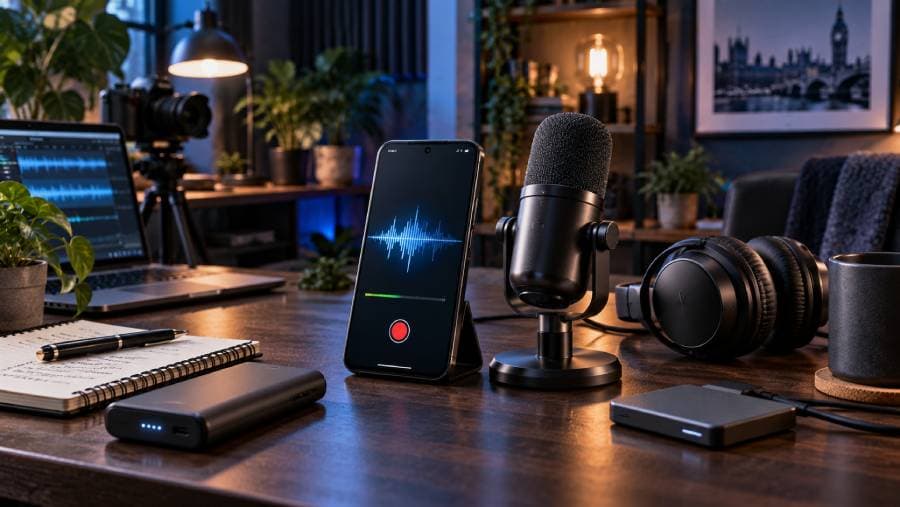
The Samsung Galaxy S26 Ultra is our best overall choice for creators who combine interviews with video capture, mobile editing and social content. The Google Pixel 11 Pro XL is the better transcript-first option, while the Sony Xperia 1 VIII is the specialist pick for wired headphone monitoring and removable storage. This guide is updated for 2026, but none of the three should be treated as having an objectively superior built-in microphone without a controlled comparison.
🥇 Samsung Galaxy S26 Ultra — Best overall premium phone for podcasting, field recording and video creators — Check price on Amazon UK
🥈 Google Pixel 11 Pro XL — Best clean Android choice for voice notes, interviews and AI-assisted creator workflows — Check price on Amazon UK
🥉 Sony Xperia 1 VIII — Best specialist phone for creators who want wired monitoring and Sony audio features — Check price on Amazon UK
👉 Continue for the detailed reviews, direct comparison and UK buying checks.
Introduction
The best phones for voice recording are not necessarily the models with the longest camera specification or the loudest claims about AI. A journalist capturing a spontaneous quote, a consultant turning a meeting into searchable notes and a creator filming a two-person video podcast have different requirements. One may prioritise transcription, another may need reliable headphone monitoring, while the third needs enough storage and processing headroom for long 4K takes.
This guide is for UK creators who want one premium Android phone to handle everyday voice notes, in-person interviews, audio-led video and field production. The built-in microphones on a modern phone are useful when speed and convenience matter, but microphone placement remains fundamental. A handset placed at the far end of a table will usually capture more room sound and less direct speech than a compatible microphone positioned close to the guest. Wind, handling noise, clothing rustle and overlapping voices cannot always be repaired afterwards.
That is why we have not ranked these phones using an unsupported claim about which has the clearest raw microphone. Instead, the recommendations reflect three distinct workflows. Samsung provides the broadest video-first capture and finishing package. Google combines explicit camera-audio tools with a particularly useful Recorder and transcription workflow. Sony supplies the most specialised physical set-up, including a 3.5mm headphone socket, configurable camera microphone modes and microSDXC expansion.
All three are 2026 premium Android models with large batteries and internal storage options suitable for creator work.
For an important interview or paid production, treat the phone as one component in a recording chain. Use a suitable close microphone where possible, add a windscreen outdoors, make a short test recording, monitor the source when the set-up allows it and run a backup if the conversation cannot be repeated.
What makes a great product in this category in 2026: the best phones for voice recording
A phone with a clear microphone is useful, but source quality depends on more than the microphone capsule. The recording application, microphone direction, distance from the speaker, room acoustics and post-processing all influence the result. These are the criteria that meaningfully separate the three phones in this guide.
- Capture controls rather than repair alone: Processing tools can reduce distracting sound, but they cannot reliably reconstruct clipped speech or separate two people talking at once. Sony provides selectable stereo and front- or rear-facing voice-priority modes within its camera workflow, while Google lists speech enhancement, wind-noise reduction and Audio Zoom for rear video. Samsung’s Audio Eraser is principally a post-capture sound-separation and adjustment feature.[2][5][11]
- A practical spoken-word workflow: Consider what happens after pressing stop. Pixel Recorder can continue with the screen asleep, supports long individual recordings and offers on-device transcription, editing and export tools.[6][7][8] That can save more time than a marginal specification advantage when the actual goal is to turn an interview into notes.
- Monitoring and external-microphone compatibility: Monitoring helps reveal wind, interference or a disconnected receiver before an entire interview is lost. Sony is the only locked phone whose official specification explicitly includes a 3.5mm audio jack.[10] Samsung and Google rely on USB-C for wired audio. However, neither a USB-C port nor a headphone socket proves that every microphone, receiver, interface, adaptor and app will work together. Test the exact chain before a paid recording.
- Enough storage for the intended format: Audio-only notes are relatively manageable, but repeated high-quality video takes can consume storage quickly. Samsung and Google offer configurations up to 1TB.[1][5] Sony also specifies a 1TB version and adds microSDXC support up to 2TB.[10] Internal storage is the simpler working volume; removable storage can be useful for field archives and transfers, subject to card speed and application behaviour.
- Battery, charging and heat management: Battery capacity is only a starting point. Pixel specifies 5,115mAh, while Samsung and Sony specify 5,000mAh.[1][5][10] Bright screens, 4K capture, mobile data, stabilisation, external receivers and background uploads can change endurance considerably. Samsung also emphasises revised cooling for demanding work, while Sony includes a setting intended to optimise the handset for longer recording.[1][11]
- Software support and privacy: A creator phone needs secure, compatible recording applications for years. Google promises seven years of OS and security updates plus Pixel Drops; Samsung states seven years of security updates for the S26 series; Sony specifies four OS upgrades and six years of security updates.[1][4][10] Also consider where recordings and transcripts are stored, who can access shared links and whether an unprocessed master is retained.
The right priority depends on whether your work is video-first, transcript-first or equipment-first. A creator filming and editing on one device will value Samsung’s processing headroom. Someone recording meetings and interviews for written work may save more time with the Pixel. A user who wants conventional wired headphones and removable media has a clearer specialist choice in the Xperia.
Top 3 phones worth buying – UK 2026
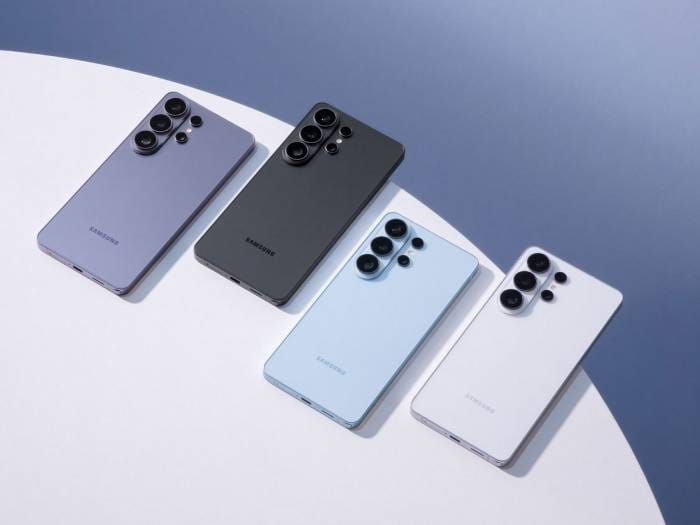
1. Samsung Galaxy S26 Ultra — Best overall for video-first creators
✅ Pros:
- Strong video capture, stabilisation, processing and on-phone editing platform
- Available with up to 1TB of internal storage for large creator projects
- Audio Eraser can reduce selected types of distracting sound in compatible media
⛔ Con:
- No verified microSD expansion or 3.5mm headphone socket, so wired creator set-ups depend on USB-C compatibility
The Samsung Galaxy S26 Ultra is the strongest overall recommendation when podcasting is only one part of a broader creator workload. It is particularly well suited to people who film interviews, record pieces to camera, cut social clips and manage large video projects on the same device. That recommendation is based on the complete production platform, not on a claim that its built-in microphones have won a controlled spoken-word comparison.
Samsung specifies Snapdragon 8 Elite Gen 5 for Galaxy, Android 16 with One UI 8.5 and configurations ranging from 12GB RAM with 256GB or 512GB storage to 16GB RAM with 1TB storage. It also has a typical 5,000mAh battery.[1] For a video creator, the 512GB and 1TB configurations are the most relevant. A 256GB handset can still accommodate many audio interviews, but becomes less comfortable when it also contains applications, cached media, multiple camera angles and unedited 4K takes.
The video toolset is the main reason to buy it. Samsung lists enhanced Super Steady with horizontal lock and APV, a production-oriented video codec intended to retain quality through editing. The company also describes a redesigned vapour chamber and thermal interface material intended to improve heat dissipation during demanding work such as video capture.[1] Those features provide useful headroom for a creator who wants to shoot, review and edit without immediately moving the files to a computer.
Audio Eraser is the headline sound feature. On supported media and applications, Samsung says it can detect and adjust categories including voice, music, noise, crowd, nature and wind. Support and results vary with the source, model, operating-system version and conditions, and a Samsung Account is required.[2] This makes Audio Eraser a potentially useful rescue tool when wind or crowd sound distracts from an otherwise usable video.
It is important to understand what that does not mean. Audio Eraser is processing, not proof that the original recording is cleaner than audio from the Pixel or Sony. Removing too much ambience can make a voice sound unnatural, and no separation tool can guarantee recovery of speech that clipped or was overwhelmed at capture. For interviews, paid work or records where accuracy matters, retain an unprocessed master alongside any AI-adjusted version.
Battery capacity is competitive rather than exceptional. Samsung states that the phone can reach up to 75% charge in around 30 minutes with a separately sold 60W adaptor.[1] That is useful during a scheduled production break, but it is not a guarantee of all-day field recording. Continuous video, a bright display, 5G uploads and attached accessories create a much heavier load than ordinary phone use. A suitable USB-C power bank remains sensible for long sessions.
The physical audio compromise is that wired monitoring and external-microphone work must go through USB-C. Samsung’s UK information identifies USB Type-C and USB 3.2 Gen 1 connectivity.[3] The reviewed documentation does not certify every USB microphone, wireless receiver, audio interface or recording app. A creator buying this as a phone for an external microphone should confirm the exact accessory chain and make sure the selected app uses the intended input rather than silently reverting to the internal microphones.
There is also no verified microSD expansion, so capacity needs to be chosen at purchase. The 1TB ceiling is valuable, but an export and backup routine is still essential. The 214g handset is large enough that a clamp, tripod or grip will generally be preferable to holding it for a long interview.[1] Its IP68 rating adds useful resilience, although Samsung warns that water and dust resistance can decline with wear.[1]
Main standout feature: the combination of flagship processing, high-capacity internal storage, stabilised video, cooling and Audio Eraser makes the Galaxy S26 Ultra the most complete single-device platform for creators whose podcasts and interviews are often accompanied by video.
Who it’s best for: choose it if you produce video podcasts, field reports, interviews and social clips on one phone and want substantial editing headroom. Avoid paying the premium solely for simple audio notes: the Pixel’s transcription workflow is more directly useful for that job, while Sony is more practical if wired headphone monitoring and removable media are non-negotiable.
If you want the premium option that pairs powerful recording with serious battery life, see the details on the Samsung Galaxy S26 Ultra in our ChoiceWise guide.
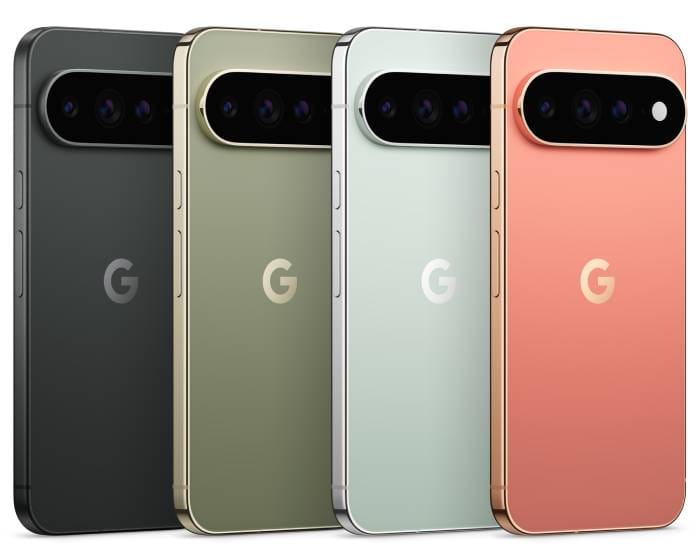
2. Google Pixel 11 Pro XL — Best for recording, transcription and interview notes
✅ Pros:
- Pixel Recorder provides a strong recording, transcription, editing and export workflow
- Explicit video-audio features include three microphones, speech enhancement and wind-noise reduction
- Up to 1TB storage, a 5,115mAh battery and seven years of OS and security updates
⛔ Con:
- Wired audio depends on USB-C, while automatic Recorder speaker labels are officially restricted to US English
The Google Pixel 11 Pro XL is the most useful choice for creators who want spoken material to become searchable text quickly. Its advantage is not an independently proven win for raw microphone fidelity. It is the way Google connects capture, on-device transcription, transcript editing, searching, sharing and export in Pixel Recorder.
Google says Recorder can continue while the screen sleeps and supports up to 18 hours in one recording.[6] English (United Kingdom) is supported for transcription, and transcription is performed using an on-device Google service or application. Google says the audio used by that service is discarded after transcription. Recordings remain on the Pixel by default unless the user chooses to back them up, share them or export them.[7][8] That is a compelling workflow for journalists, researchers, students, consultants and podcasters who need a quick written record after an interview.
There is one important UK qualification. Google’s automatic speaker-label feature is officially available only in US English, even though UK English transcription is supported. Its labels are generic speaker identifiers that can be edited afterwards.[9] A British interviewer should therefore expect to identify or correct speakers manually rather than buying on the assumption that every UK-English conversation will be separated automatically. Transcription accuracy will also vary with regional accents, technical vocabulary, background noise and people speaking over one another.
The camera-audio specification is unusually relevant. Google lists three microphones, noise suppression and stereo recording, with rear-video features including speech enhancement, wind-noise reduction and Audio Zoom.[5] These tools can help focus attention on speech in a video interview, but they do not remove the need for close placement or a windscreen. Audio Zoom is also not a substitute for individually miking two guests when clean, separately controllable voices are required.
Video capabilities include rear 4K recording at 24, 30 and 60 frames per second, front-camera 4K at 30 or 60fps and additional tools such as Pro Stable Video, Video Boost and Audio Magic Eraser.[5] That gives the Pixel credible video-podcast capability, although its real distinction from Samsung is organisational simplicity rather than a larger production feature set. If the final output is a written article, meeting summary or searchable archive, the Recorder workflow is likely to matter more than an extra camera mode.
Google specifies 256GB storage with 12GB RAM, or 512GB and 1TB configurations with 16GB RAM. Its typical 5,115mAh capacity is the largest published battery figure of the three phones, and Google claims more than 30 hours under its defined usage conditions. It can reach up to 75% charge in approximately 30 minutes with a separately sold 45W USB-C PPS charger or higher.[5] These manufacturer figures should not be converted into a promised number of active recording hours. Video mode, display brightness, mobile data, heat and connected wireless microphones can change endurance substantially.
Like Samsung, the Pixel has no officially listed 3.5mm headphone socket. Google lists USB Type-C 3.2 as the physical connection.[5] Wired headphones, USB microphones and wireless-microphone receivers therefore compete for the USB-C port unless a suitable, compatible hub or interface is used. The presence of USB-C does not certify that every accessory or third-party podcast app will select the desired external input. Test recording, playback and channel configuration before leaving for an important interview.
Privacy deserves attention because transcripts make spoken material easier to search and share. Local-by-default recording is useful, but that position changes when a creator enables backup, exports to another service or sends a public or restricted link. Use a strong screen lock, review sharing permissions and maintain an organised backup structure. Sensitive interviews should not be left under ambiguous file names in an unreviewed cloud folder.
Main standout feature: Pixel Recorder turns the phone into more than a smartphone voice recorder. Long capture, UK-English transcription, transcript editing and deliberate sharing or export make it the most efficient locked option for getting from a conversation to usable notes.
Who it’s best for: choose the Pixel if your working day contains interviews, lectures, voice memos or meetings that need to become searchable text. It is also a strong clean-Android video option. Choose Sony instead if direct wired headphone monitoring and removable media are more important, or Samsung if intensive video capture and on-device finishing dominate your workload.
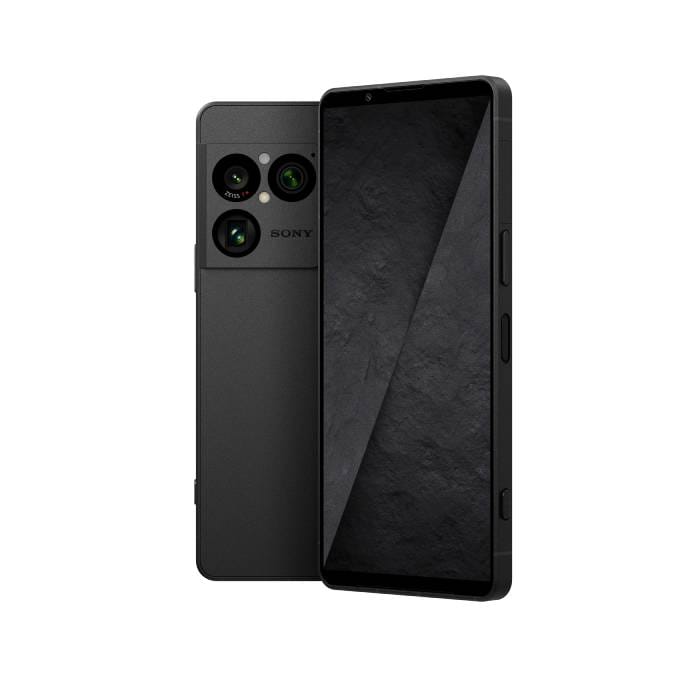
3. Sony Xperia 1 VIII — Best for wired monitoring and storage flexibility
✅ Pros:
- 3.5mm headphone socket makes conventional wired monitoring more straightforward
- Selectable stereo and front- or rear-facing voice-priority microphone modes for camera video
- MicroSDXC expansion up to 2TB adds removable archive and transfer flexibility
⛔ Con:
- Its specialist controls are less convenient than Pixel Recorder for automatic transcription and notes-based workflows
The Sony Xperia 1 VIII is the most specialised creator phone in this comparison. It does not win by offering the simplest AI workflow or by claiming superior raw built-in voice quality. Instead, it combines physical and software features that are unusually relevant to people who think about monitoring, microphone direction and removable storage before recording.
The most obvious difference is the 3.5mm audio jack. Sony explicitly lists the socket alongside Hi-Resolution Audio, LDAC wireless audio, stereo recording, full-stage stereo speakers and Dolby Atmos.[10] For creators, the practical benefit is that conventional wired headphones can be connected without occupying USB-C. Wired monitoring also avoids the latency and connection complexity that can accompany Bluetooth headphones.
Do not interpret the socket as a promise that every analogue lavalier microphone will work. The official material reviewed clearly supports wired-headphone audio, but it does not explicitly certify analogue microphone input, plug-in power, every TRRS standard or compatibility with all headset and lavalier designs. If a 3.5mm microphone is central to your set-up, obtain accessory-maker confirmation or test the exact microphone and cable before relying on it.
Sony’s camera microphone modes are the second differentiator. Its documentation provides All directions in stereo, Voice priority from the rear and Voice priority from the front. The direction can therefore be matched to whether the presenter is behind the phone or the interview subject is in front of the rear cameras. Wind-noise reduction is also included in the camera workflow.[11] That is more explicit capture control than the other locked products document for camera video.
These modes should still be treated as tools rather than magic isolation. They are documented for Sony’s camera video workflow and should not be assumed to appear in every standalone recorder or third-party podcast app. The Help Guide also warns that touching the rear panel can introduce noise during voice-priority recording.[11] Mounting the Xperia on a tripod or grip and avoiding handling during a take will therefore improve consistency.
Storage is another major advantage. Sony lists 256GB with 12GB RAM and a 1TB model with 16GB RAM. Both configurations support microSDXC cards up to 2TB.[10] That makes the Xperia the only phone here with an officially specified removable-storage route. A field creator can potentially keep projects on separate cards, transfer media without tying up the phone’s USB-C port or retain a removable archive after a trip.
There are qualifications. The supplied Amazon results verified likely exact 256GB handset listings rather than establishing current Amazon availability of the 1TB version. Card speed also matters, and the dossier does not establish that every camera mode or recording application will write directly to every microSD card. Buy a reputable, suitably fast card, format it as recommended and run a sustained test in the intended mode before recording irreplaceable material.
Sony specifies a 5,000mAh battery, USB Power Delivery charging and a setting designed to optimise the phone for longer recording by disabling battery-consuming functions.[10][11] It also supports 4K HDR video at 24, 30, 60 and 120fps, Pro Video and optical stabilisation.[10] These are useful video credentials, but no manufacturer battery figure can guarantee a particular session length. High frame rates, screen brightness, mobile data and heat still need active management.
The Xperia runs Android 16, with up to four OS upgrades and six years of security updates.[10] That is a credible ownership period, although it is shorter than Google’s seven-year OS and security commitment and Samsung’s seven years of security updates. Buyers intending to keep the handset for as long as possible should account for that difference rather than looking only at launch hardware.
Main standout feature: no other locked phone combines a 3.5mm headphone socket, directional camera microphone choices and microSDXC expansion up to 2TB. Together, those features make the Xperia the most deliberate, equipment-friendly field option.
Who it’s best for: choose it if you want straightforward wired headphone monitoring, removable storage and more control over which side of the camera receives voice priority. Avoid it if your main goal is automatic transcription and searchable meeting notes; the Pixel provides the more direct route from recording to text.
Comparison table
The decisive distinction between the best phones for voice recording is workflow rather than an unverified microphone-quality ranking. Samsung is the most complete video-production phone, Pixel is the best interview-to-transcript device, and Sony gives equipment-focused creators the clearest monitoring and storage advantages.
| Best for | Exact model | Key specifications | Key strength | Main limitation | Typical UK buyer |
|---|---|---|---|---|---|
| Video podcasts and mobile finishing | Samsung Galaxy S26 Ultra | 256GB, 512GB or 1TB; 5,000mAh; USB-C; Audio Eraser | Broadest video capture, processing and editing package | No verified microSD slot or 3.5mm socket | Video creator, field reporter or social producer |
| Voice notes, interviews and transcripts | Google Pixel 11 Pro XL | 256GB, 512GB or 1TB; 5,115mAh; three microphones; Pixel Recorder | Strongest recording-to-searchable-text workflow | Speaker labels are limited to US English; wired audio uses USB-C | Journalist, researcher, student or meeting-heavy professional |
| Wired monitoring and removable storage | Sony Xperia 1 VIII | 256GB or 1TB; microSDXC up to 2TB; 5,000mAh; 3.5mm jack | Directional video mic modes and equipment-friendly storage | Less direct transcription workflow and shorter update promise | Field creator or camera-focused audio enthusiast |
Samsung Galaxy S26 Ultra: Check price on Amazon UK
Google Pixel 11 Pro XL: Check price on Amazon UK
Sony Xperia 1 VIII: Check price on Amazon UK
What to consider before buying
- Test the complete external-microphone chain: Do not buy a phone solely because it has USB-C, Bluetooth or a 3.5mm socket. Confirm the microphone or wireless receiver, cable, adaptor, power requirement and recording application. Make a test, cover both channels if using a dual receiver and check that the app has not selected an internal microphone instead.
- Choose capacity around video, not occasional audio: A disciplined audio-only user can manage well with 256GB, but frequent 4K work makes 512GB a more comfortable starting point. Consider 1TB for long trips or on-phone editing. Sony’s microSDXC slot adds flexibility, but it does not remove the need for a separate backup.
- Budget for creator accessories: A compact tripod or clamp reduces handling noise. Outdoor recording may need a windscreen, while a power bank protects against heavy video drain. Samsung’s quoted fast-charge result requires a separately sold 60W adaptor, and Google’s requires a compatible 45W USB-C PPS charger or higher.[1][5]
- Keep clean and processed masters: Audio Eraser, Audio Magic Eraser, speech enhancement and wind reduction can improve usability, but processing can introduce artefacts or remove wanted ambience. Save the untouched recording before experimenting, particularly for paid interviews, documentary work or a record that may later need verification.
- Plan a backup for important conversations: Phones can run out of storage, overheat, lose an accessory connection or receive an interruption. When an interview cannot be repeated, use a second recorder or another independently powered device. Confirm that both recordings have started before beginning.
- Compare long-term support: Pixel offers the strongest stated software commitment in this group, with seven years of OS and security updates. Samsung promises seven years of security updates, while Sony specifies four OS upgrades and six years of security coverage.[1][4][10] The distinction matters if recording-app compatibility and security are expected to last through several production cycles.
- Review transcript and sharing privacy: Name recordings clearly, protect the phone with a strong lock and understand what changes when a local recording is backed up or shared. Avoid leaving sensitive guest audio behind a broadly accessible link. Keep publication masters and private research recordings in separate folders.
- Inspect the exact Amazon UK offer: Runtime verification found likely exact new listings for all three models, but Amazon search results and offers change.[12][13][14] Check storage, colour, condition, seller, fulfilment, delivery estimate, returns, included cable or charger and confirmation of a valid UK manufacturer warranty. Do not assume a lower-priced third-party offer has the same support terms as one sold directly by Amazon or the manufacturer.
- Obtain clear consent: Explain that recording is taking place, why it is being made and whether it may be edited, published or broadcast. Ofcom’s broadcasting guidance says broadcasters should normally identify themselves, explain the purpose and state when a telephone call is recorded for possible broadcast.[15] Sensitive or disputed situations may require specific legal advice.
Finally, buy for the weakest part of your real workflow. If interviews remain trapped as unnamed audio files, Pixel’s organisation may be worth more than specialist hardware. If monitoring is difficult, Sony addresses that directly. If the phone must also act as the main camera and editing workstation, Samsung provides the more complete overall package.
Frequently asked questions
Which phone is best for recording spoken interviews in the UK?
Choose the Google Pixel 11 Pro XL when the interview needs to become notes or a transcript quickly. Pixel Recorder supports long recordings, can continue with the screen asleep and supports English (United Kingdom) transcription, transcript editing and export.[6][7][8] The main qualification is that automatic speaker labels are restricted to US English, so UK-English interviews may need manual speaker identification.[9]
Choose the Sony Xperia 1 VIII instead for camera-video interviews where wired headphone monitoring, front- or rear-facing voice-priority modes and removable storage matter. Samsung is the stronger overall choice when the interview is part of a video-led project requiring substantial capture and editing capability. There is insufficient controlled evidence to call any of the three the objectively clearest raw built-in microphone.
Can one of these phones replace a dedicated podcast recorder?
It can for casual voice notes, spontaneous interviews and some single- or two-person productions, but not automatically for every podcast. A phone paired with a confirmed compatible external microphone can produce a much more controlled result than the handset left on a distant table. It is also convenient for immediate editing, transcription and publishing.
A dedicated recorder remains safer for important multi-person, paid, broadcast or evidential work because it can provide more predictable inputs, physical controls, removable media and redundancy. Whichever phone you choose, perform a short test, monitor when possible, avoid touching the handset during capture and run a backup if the conversation cannot be repeated.
Is 256GB enough for voice recording and video podcasts?
It is generally workable for audio-only notes and interviews if files are exported and backed up regularly. It is less comfortable for a creator who also records repeated 4K video takes, retains raw material while travelling or edits on the phone. For that workload, 512GB is a more practical baseline and 1TB reduces the need for constant offloading.
Samsung and Pixel both list internal configurations up to 1TB.[1][5] Sony offers 256GB and 1TB specifications plus microSDXC expansion up to 2TB.[10] Removable storage is useful, but test the card and application before production because the specification does not guarantee that every recording mode will write directly to every card at the required speed.
Do I need permission to record a podcast guest or interview in the UK?
The safe practical approach is to obtain clear, informed agreement before recording. Tell the guest that recording is taking place, explain the purpose, state whether the material may be edited or published and keep a record of the agreement. This is especially important when the audio contains personal, sensitive or commercially confidential information.
Rules vary according to the context, purpose and whether the recording is personal, commercial, editorial or broadcast. Ofcom says broadcasters should normally identify themselves, explain the purpose and state when a telephone call is being recorded for possible broadcast.[15] This is general editorial guidance rather than legal advice; obtain specific advice for sensitive, disputed or regulated recordings.
Final verdict
Samsung Galaxy S26 Ultra is the strongest overall choice because it provides the most complete platform for creators who need one phone to capture interviews, shoot stabilised video, manage large projects and perform on-device finishing. Audio Eraser adds a useful recovery option, although it should never be confused with guaranteed clean source capture.
- Samsung Galaxy S26 Ultra: best overall premium phone for podcasting, field recording and video creators — Check price on Amazon UK
- Google Pixel 11 Pro XL: best clean Android choice for voice notes, interviews and AI-assisted creator workflows — Check price on Amazon UK
- Sony Xperia 1 VIII: best specialist phone for creators who want wired monitoring and Sony audio features — Check price on Amazon UK
Pick the Pixel if searchable transcripts save more time than advanced video controls. Pick the Xperia if a 3.5mm headphone connection, directional video microphone modes and microSDXC storage solve practical field problems. Whichever model you buy, verify the exact UK configuration and seller, test every external microphone and application together, and keep a backup recording for work that cannot be repeated.
If you’re weighing clear mic capture and storage for podcasting on the Galaxy S26 Ultra versus the clean, AI-friendly voice workflow of the Pixel 11 Pro XL—or the more specialist wired monitoring of the Xperia 1 VIII— ChoiceWise AI Wizard can recommend the best fit for your exact creator setup.
By ChoiceWise