iPhone 18 Pro vs iPhone 17 Pro: Should You Upgrade? (UK 2026)
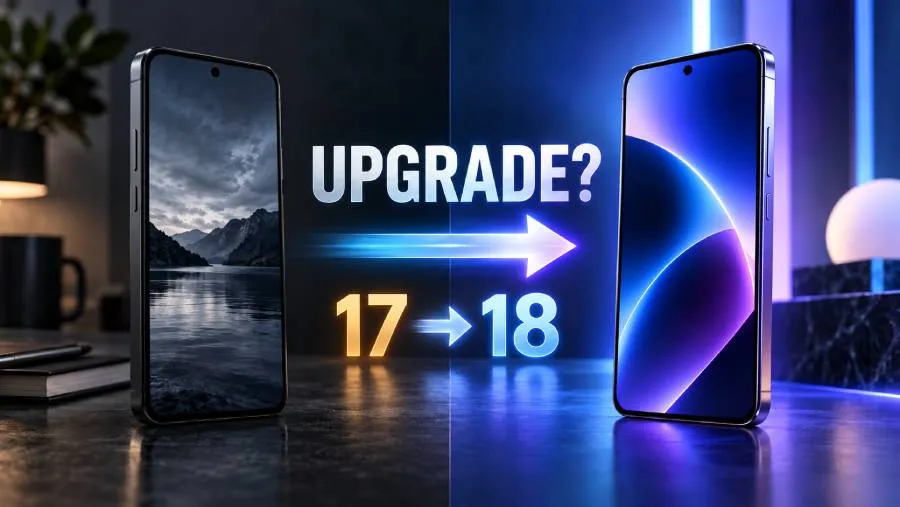
👉 Should you spend up to £2,399 on Apple's newest Pro, or is last year's model — now selling for less — still the smarter buy? The iPhone 18 Pro brings a new camera trick, longer battery life and noticeably better heat management under load, but the display, telephoto camera and everyday performance class barely move from the iPhone 17 Pro. If you already own a 17 Pro, this is one of Apple's smaller year-on-year steps, closer to an "S-year" refresh than a redesign. If you're buying new, a discounted 17 Pro still buys credible flagship spec at a lower outlay, while the 18 Pro earns its premium mainly for keen photographers and anyone still on a 16 Pro or older. Quick picks below, then the full breakdown for 2026.
- Apple iPhone 18 Pro — this year's upgrade, for camera enthusiasts and anyone coming from an older iPhone. 👉 Check price on Amazon UK
- Apple iPhone 17 Pro — the value pick, for existing 17 Pro owners and budget-conscious new buyers. 👉 Check price on Amazon UK
Why the iPhone 18 Pro launch matters if you already own a 17 Pro
Apple's Pro line moves fast enough that "wait for the next one" can feel like permanent advice. But the iPhone 18 Pro's UK release on 18 September 2026 lands at an unusually practical moment: Apple has already pulled the iPhone 17 Pro from its own online store, yet UK retailers are still selling genuine new stock, some of it noticeably cheaper than it was a month ago. That leaves three distinct audiences rather than one obvious answer — someone with a two-year-old iPhone weighing a straight upgrade, someone already on a 17 Pro wondering if this year's changes justify the outlay, and someone shopping new for the first time, deciding whether to pay full price for the newest model or take a genuine discount on the outgoing one. This guide works through what changed, what didn't, and which of those three you are.
What separates a worthwhile Pro iPhone upgrade from a spec-sheet refresh
Every autumn, Apple's Pro launch reads like a wall of new numbers — a faster chip, a slightly bigger battery, another camera spec. Most of them don't change how the phone feels to use. Only a handful do, and knowing which is which is the difference between a worthwhile upgrade and an expensive habit.
- Camera hardware, not camera megapixels. The resolution stayed 48MP on the main sensor for both the iPhone 18 Pro and iPhone 17 Pro [1][3], so that number alone tells you nothing. What changed is the aperture: the 18 Pro's main camera physically opens and closes between four settings, from ƒ/1.48 to ƒ/4.0, while the 17 Pro's is fixed at ƒ/1.78 [1][3]. That's a measurable optical difference in low light and depth of field, not a marketing rename.
- Sustained performance, not benchmark scores. Both phones use a 6-core CPU with 12GB of RAM [3][5][6], and single-app speed differences are rarely noticeable day to day. What UK reviewers have flagged as the more meaningful change is thermal handling: the 18 Pro dissipates heat fast enough after heavy video work that it avoids the extended cooldown periods some testers hit on the 17 Pro [7].
- Battery life measured in hours, not percentages. Apple rates the 18 Pro at up to 34 hours of video playback against 31 hours for the 17 Pro [1][3] — a modest 10% gain, closer to a mid-cycle refresh than a redesign.
- Charging speed depends on the charger you already own. The 18 Pro's fastest wired charging (50% in around 15 minutes) needs a 60W-or-higher adapter, not supplied in the box; the 17 Pro reaches the same 50% mark in about 20 minutes with a 40W adapter [1][3]. Unless you're buying a new charger anyway, the practical gap is smaller than the headline figures suggest.
- What stayed identical matters as much as what changed. Display size, resolution, peak brightness and ProMotion refresh rate are unchanged between generations [1][3], as are the phone's dimensions, IP68 water resistance rating, Wi-Fi 7 and Bluetooth 6 connectivity [1][3]. If screen quality, physical size or wireless speed are your buying criteria, this year's launch has nothing new to offer.
- The cellular modem changed, even if most buyers won't notice. The 18 Pro moves to Apple's own in-house C2 modem [1], while the 17 Pro uses a third-party Qualcomm Snapdragon X80 [11]. On UK 4G/5G networks the everyday difference is unlikely to be noticeable, but it's a genuine architectural change, not a rebrand, and it matters more if you value Apple controlling its own connectivity hardware long-term.
For most buyers, the honest takeaway is that this is a camera-and-battery update wrapped in a full-price relaunch, not a ground-up redesign. None of that makes the 18 Pro a bad phone — it's simply a smaller step than the launch marketing implies, and the size of that step is exactly what should decide whether you pay full price for it, keep what you already own, or take the discount on the outgoing model instead.
Top 2 products worth buying – UK 2026
1. Apple iPhone 18 Pro — this year's most capable Pro, best for camera-driven upgraders
✅ Pros:
- Genuine new main-camera hardware: a four-stage mechanical variable aperture gives hands-on low-light and depth-of-field control, not just a software effect
- Best thermal handling of any recent Pro iPhone under sustained video recording, avoiding the extended cooldowns some testers hit on the 17 Pro
- Longest battery life and fastest wired charging Apple has put in a Pro-sized iPhone, if you own a compatible 60W+ charger
⛔ Con:
- The core experience — display, telephoto reach, dimensions and RAM — is close enough to the 17 Pro that owners of last year's model may not feel much day-to-day difference
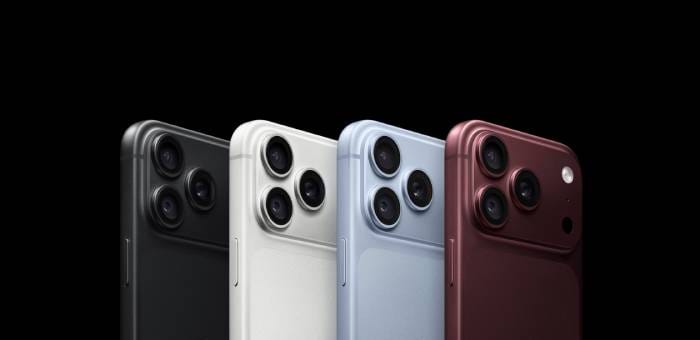
The iPhone 18 Pro is Apple's newest Pro-tier iPhone, on sale in the UK from 18 September 2026 at £1,199 for 256GB, rising to £1,399, £1,799 and £2,399 for 512GB, 1TB and 2TB respectively [2]. It keeps the same 6.3-inch OLED display as its predecessor — 2622×1206 pixels, 460ppi, up to 120Hz ProMotion and the same three-tier brightness rating of 1,000 nits typical, 1,600 nits HDR and 3,000 nits outdoor peak [1] — so anyone expecting a visibly different screen will be disappointed. What Apple has changed sits mostly in the camera module and the chip underneath it.
The headline change is the main camera's aperture. Where the 17 Pro's 48MP main sensor is fixed at ƒ/1.78, the 18 Pro's equivalent sensor physically switches between four aperture settings — ƒ/1.48, ƒ/1.8, ƒ/2.8 and ƒ/4.0 — under automatic or manual control [1]. In practice, reviewers who tested it alongside full manual ISO and shutter-speed controls found it useful for low-light shooting, gathering roughly 50% more light at its widest setting and holding detail in situations that used to blow out or blur [7]. The ultra-wide (48MP, 13mm, ƒ/2.2, 120° field of view) and telephoto (48MP, 100mm/4x optical with a 200mm/8x-equivalent crop) modules are effectively unchanged from the 17 Pro on paper [1][3], so the aperture upgrade is the one camera change worth paying for.
Under the hood, the A20 Pro chip replaces the A19 Pro, with the same 12GB of RAM carried over [3][5][6]. Apple's own claim is up to 40% faster graphics performance than the 17 Pro generation [1] — aimed squarely at gaming and sustained video work rather than everyday app speed, where the difference is unlikely to be noticeable. What UK reviewers have flagged as the more useful change is thermal management: testing found the 18 Pro ran hot only when shooting video with both the variable aperture and cinematic effects active simultaneously, and cooled down quickly afterwards, avoiding the longer cooldown periods that affected the 17 Pro under similarly demanding recording sessions [7]. For anyone who shoots video for more than a few minutes at a time, that's arguably a bigger everyday change than the chip's raw benchmark gain.
Battery life moves from a rated 31 hours of video playback on the 17 Pro to 34 hours on the 18 Pro [1][3] — a genuine but incremental improvement, not a step-change. Charging is quicker on paper too: the 18 Pro reaches 50% in around 15 minutes with a 60W-or-higher adapter, against 20 minutes on the 17 Pro with a 40W adapter [1][3] — worth knowing since neither phone ships with a fast charger in the box. Independent testing of everyday battery life under moderate use put the 18 Pro in the same "a day and a half to two days" range as its predecessor [7], so don't expect the improved rating to translate into a dramatically longer day away from a charger.
Connectivity hardware moved on too, even if the change is invisible day to day: the 18 Pro uses Apple's own C2 cellular modem in place of the third-party chip in the 17 Pro [1], alongside the same Wi-Fi 7 and Bluetooth 6 radios as its predecessor [1][3]. UK buyers keep a physical nano-SIM tray alongside eSIM support on both generations — unlike the US, where the Pro range has dropped the SIM tray entirely, the UK and the rest of Europe retain it [1][3].
Physically, the 18 Pro is 7g heavier than the 17 Pro at 211g against 204g, but shares identical width, height and depth, the same aluminium unibody build with Ceramic Shield 2 on front and back, and the same IP68 water resistance [1][3]. The colour range has moved on completely too — Black, Silver, Glacier and Burgundy replace the 17 Pro's Silver, Cosmic Orange and Deep Blue, with only Silver carried over [1][3] — worth checking both line-ups before committing either way if colour is a deciding factor.
Early UK reviews describe this as an incremental generation: meaningful if you value the new camera control and better thermal behaviour, less convincing if you're comparing it directly against a healthy 17 Pro rather than an older phone [7]. It's the right buy for photographers and video shooters who will use manual aperture control, for anyone whose current iPhone predates the 17 Pro, and for buyers who want the newest hardware and don't mind paying full price for a smaller year-on-year gain. It's a harder sell for existing 17 Pro owners chasing a like-for-like refresh.
If you’re leaning toward a full upgrade this year, jump to the Apple iPhone 18 Pro ChoiceWise page for the full breakdown.
2. Apple iPhone 17 Pro — last year's Pro, now discounted, best for value-focused buyers and current owners
✅ Pros:
- Same 6.3-inch 120Hz display, same 12GB RAM/6-core silicon class and near-identical camera hardware to the 18 Pro, for noticeably less money while retailer stock lasts
- Currently selling below its original UK launch price at major retailers as Apple clears the line ahead of the 18 Pro's on-sale date
- Camera system praised at launch for exceptional low-light detail, strong portrait separation and smooth handheld video stabilisation
⛔ Con:
- No longer sold directly by Apple UK, so official warranty terms and long-term stock now depend on the retailer, and the phone's software-support clock started a year earlier than the 18 Pro's
The iPhone 17 Pro launched in the UK in autumn 2025 at £1,099 for 256GB, £1,299 for 512GB and £1,499 for 1TB [4], and Apple has now removed it from its own online store following the iPhone 18 Pro's launch [4]. That doesn't mean it's gone: major UK retailers continue to sell genuine new stock, with the 512GB model currently priced at around £1,199 — roughly £100 below its original launch price for that capacity [4]. For anyone not fixed on owning the newest model, that gap is worth taking seriously.
Spec for spec, the case for the 17 Pro is stronger than "last year's phone" suggests. It uses the same 6.3-inch 2622×1206 OLED display, the same 460ppi density, the same up-to-120Hz ProMotion refresh and an identical three-tier brightness rating to the 18 Pro [1][3]. Its A19 Pro chip carries the same 12GB of RAM and the same 6-core CPU/GPU core-count structure as its successor [3][5][6], so day-to-day speed — opening apps, browsing, gaming, general multitasking — is close enough that most owners won't notice a generational gap. The main camera is the same 48MP Fusion sensor found in the 18 Pro, with second-generation sensor-shift optical stabilisation, though its aperture is fixed at ƒ/1.78 rather than the 18 Pro's variable ƒ/1.48–ƒ/4.0 range [1][3]. The 48MP ultra-wide and 48MP telephoto (100mm, 4x optical, up to an 8x optical-quality crop) are effectively identical hardware to the newer phone [1][3], and independent testing at launch found the resulting camera system captured usable low-light images with well-controlled noise, delivered consistently strong subject separation for portraits, and produced notably smooth handheld video [10].
Battery life is rated at up to 31 hours of video playback, three hours short of the 18 Pro's 34-hour figure, and wired charging tops out at 50% in about 20 minutes with a 40W-or-higher adapter rather than the newer phone's 15-minute figure [1][3] — both modest gaps rather than reasons on their own to pay full price for the newer model. Under the bonnet, the 17 Pro uses a third-party Qualcomm Snapdragon X80 modem rather than the 18 Pro's in-house Apple chip [11], though on the same Wi-Fi 7 and Bluetooth 6 radios [1][3] the practical wireless experience is the same. UK models also keep the physical nano-SIM tray alongside eSIM, exactly like the 18 Pro [3]. The one area where the 17 Pro trails by more than a rounding error is thermal handling under sustained video recording: reviewers found it ran warmer for longer during extended 4K and cinematic-mode shooting than the 18 Pro manages [7], the one genuine trade-off worth weighing if you shoot a lot of video.
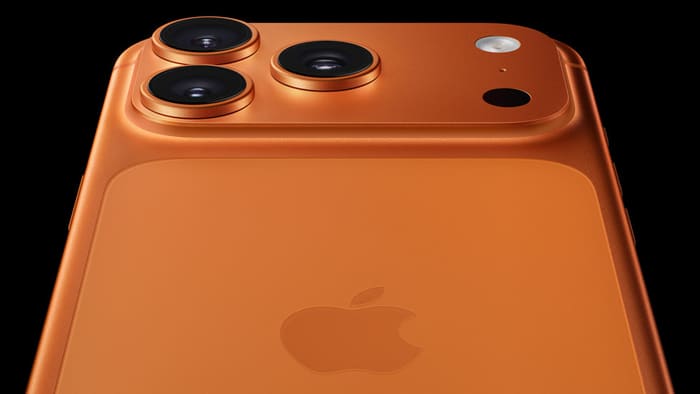
Physically, the 17 Pro is 7g lighter than its successor at 204g, with identical width, height and depth, the same aluminium unibody build, Ceramic Shield 2 front and back, and the same IP68 rating [1][3]. It ships in Silver, Cosmic Orange and Deep Blue [3] — a distinctly different palette to the 18 Pro's Black, Silver, Glacier and Burgundy line-up, worth checking if colour matters to the decision.
The trade-offs of buying outside Apple's own store are tangible, not cosmetic. Warranty and returns terms now depend on whichever UK retailer you buy from rather than Apple directly, and because the 17 Pro launched a year earlier, its clock on major iOS version updates and long-term feature support started twelve months before the 18 Pro's will [4]. Stock is also finite: once retailers sell through what they're holding, new units won't be replaced. None of that erases the underlying case, though — for existing 17 Pro owners, there is very little in this year's changes that justifies replacing a phone that still does almost everything the newest model does, and for a new buyer prioritising value over having the newest hardware, a discounted 17 Pro remains a capable flagship at a notably lower price than the 18 Pro asks for the same core experience.
If you’re shopping for last year’s “hold-steady” Pro at a better price, Apple iPhone 17 Pro is the one to look up on ChoiceWise.
Comparison table: iPhone 18 Pro vs iPhone 17 Pro
The numbers land closer together than a full generational gap usually suggests. Screen, RAM, core count, dimensions and water resistance are effectively identical, so the decision comes down to three things: whether the 18 Pro's variable-aperture camera and better thermal handling matter to how you use a phone, whether the battery gain and faster charging are worth paying full price for on their own, and how much weight you put on buying directly from Apple with a fresh support clock versus saving on genuine new stock elsewhere. None of those questions has a universally right answer — they depend on which buyer type below best describes you, and none of them are settled by chip benchmarks or megapixel counts alone.
| Best for | Exact model | Key specifications | Key strength | Main limitation | Typical UK buyer |
|---|---|---|---|---|---|
| Camera-driven upgraders | Apple iPhone 18 Pro | A20 Pro, 12GB RAM, variable ƒ/1.48–ƒ/4.0 main camera, 34hr video playback | Variable-aperture camera and faster thermal recovery under sustained recording | £1,199+ starting price, most other gains are incremental | Upgrading from an iPhone 16 Pro or older, or a content creator prioritising camera control |
| Value-focused buyers | Apple iPhone 17 Pro | A19 Pro, 12GB RAM, fixed ƒ/1.78 main camera, 31hr video playback | Same display, RAM and near-identical camera hardware to the 18 Pro, at a discount | No longer sold directly by Apple UK; runs warmer under extended video recording | Existing 17 Pro owners, and new buyers prioritising value over the newest model |
Apple iPhone 18 Pro: 👉 Check price on Amazon UK
Apple iPhone 17 Pro: 👉 Check price on Amazon UK
What to consider before buying an iPhone in 2026
Buying either of these phones in the UK right now comes with a few practical steps that matter more than usual, given the 17 Pro's changed status.
- Check who you're buying the 17 Pro from. With Apple no longer selling it directly, confirm the retailer is an authorised reseller offering a genuine new — not refurbished or grey-import — unit with a UK warranty, and keep the receipt; the retailer, not Apple, is now your first point of contact for returns [4].
- You don't need to worry about eSIM-only restrictions here. Unlike the US, both phones keep a physical nano-SIM tray alongside eSIM support in the UK [1][3], so an existing physical SIM will work in either model without a network switch — useful if you're not ready to move to eSIM, or want to run a SIM and an eSIM side by side for travel.
- Storage tier matters more than the chip this year. Neither phone gained on-device capability that would push you toward a bigger tier than you'd otherwise pick — choose storage based on how you use photos, 4K video and apps day to day. The 18 Pro's entry tier stops at 256GB, the same starting point as the 17 Pro, so stepping up from 256GB to 512GB costs roughly the same £200 jump on both phones [2][4] — it isn't a reason on its own to favour either generation.
- The software-support clock starts at launch, not at purchase. Because the 17 Pro launched in 2025, a 17 Pro bought new today has already used a year of its eventual major-iOS-update window compared with a same-day 18 Pro purchase [4]. If you tend to keep a phone for many years, weigh that against the discount.
- Trade-in and accessory carryover both work in the 17 Pro's favour. Because the two phones share identical dimensions, cases, screen protectors and MagSafe accessories bought for a 17 Pro will fit an 18 Pro too, and vice versa [1][3] — useful if you upgrade later rather than starting fresh.
- Colour availability will shrink faster on the outgoing model. With Apple no longer restocking the 17 Pro, popular colours are more likely to sell out first at retailers than the newer phone's four-colour range [1][3].
- Consider AppleCare+ separately if it matters to you. It's normally added at the point of purchase through Apple or an authorised reseller; if you buy a 17 Pro from a retailer that doesn't offer it, factor third-party insurance into the total cost before comparing headline prices.
- Apple Trade In still applies to either phone. Apple's trade-in scheme accepts eligible older iPhones as credit towards a new purchase regardless of which Pro model you choose, with a free trade-in kit if you're posting the old device in rather than handing it over in store [2]; get a quote for your current phone before deciding how much either upgrade will cost you out of pocket.
If Android's best flagships are also on your shortlist, our comparison of the iPhone 17 Pro against Samsung's Galaxy S26 Ultra breaks down how Apple's outgoing Pro stacks up outside its own ecosystem.
Frequently asked questions about the iPhone 18 Pro and iPhone 17 Pro
Is the iPhone 18 Pro worth upgrading to if I already have an iPhone 17 Pro?
For most 17 Pro owners, no — not on its own. Display, RAM, core hardware class, dimensions and most of the camera system carry over unchanged, and UK reviewers have described the jump as an incremental, "S-year"-style update rather than a redesign [7]. It's a stronger case if you shoot a lot of video and want the 18 Pro's faster thermal recovery, or you specifically want manual variable-aperture control for photography — otherwise, the money is better spent elsewhere.
Can I still buy a new iPhone 17 Pro in the UK, and is it safe to do so?
Yes. Apple removed it from its own UK store once the iPhone 18 Pro launched, but major UK retailers continue to sell genuine new stock while it lasts, in some cases below the original launch price [4]. Buy from an established, authorised retailer, confirm the listing is for a new unit, and keep your receipt for warranty purposes, since Apple is no longer the direct seller.
What's the single biggest everyday difference between the two phones?
Camera control, not raw specification. The 18 Pro's main camera has a genuine mechanical variable aperture (ƒ/1.48–ƒ/4.0); the 17 Pro's is fixed at ƒ/1.78 [1][3]. Reviewers found the difference most useful in low light and for depth-of-field control with manual settings — a worthwhile photographic upgrade, even though most other hardware is shared between the two phones [7].
Should I buy the 18 Pro new, or a discounted 17 Pro, if this is my first Pro-tier iPhone?
If budget matters more than owning the newest hardware, the 17 Pro is a capable choice at its current discounted price, with nearly the same display, chip class and camera resolution as the 18 Pro [1][3][4]. If you plan to keep the phone for many years, want the longest possible software-support runway, or will use the improved camera controls, the 18 Pro's higher price buys measurable gains rather than just a newer badge.
Do I miss out on Apple's newest AI features if I buy the discounted 17 Pro instead of the 18 Pro?
No, and this is one area where the discount costs you nothing. Apple's most advanced on-device Siri features introduced in iOS 27 — including custom voice expressiveness and a major dictation-accuracy improvement — needed a minimum of 12GB of RAM to run when they launched [12]. Both the iPhone 17 Pro and iPhone 18 Pro carry that same 12GB, unlike the standard non-Pro models [1][3][5][6], so neither phone is behind the other on Apple Intelligence capability. The RAM bar, not the model year, is what decides access here.
Final verdict: iPhone 18 Pro or iPhone 17 Pro?
The iPhone 18 Pro is the stronger phone in absolute terms, but only decisively so in two areas — its variable-aperture main camera and its noticeably better thermal handling under sustained video recording — with everything else amounting to modest, incremental gains over its predecessor [1][3][7].
- Apple iPhone 18 Pro — the right buy for photographers and video creators who'll use manual aperture control, anyone replacing an iPhone 16 Pro or older, and buyers who simply want the newest hardware and a full software-support runway from day one. 👉 Check price on Amazon UK
- Apple iPhone 17 Pro — the right buy for existing 17 Pro owners, since there's little reason to replace a phone this close to its successor, and for new buyers who'd rather save on genuine new stock than pay for changes they may not notice day to day. 👉 Check price on Amazon UK
If you're weighing this purely on value, the maths favours the 17 Pro: you're giving up one camera feature and a few hours of battery life for a solid discount on hardware that's otherwise nearly identical. If you're weighing it on capability and you shoot enough photo or video to use the new camera controls properly, the 18 Pro earns its premium. The one buyer who shouldn't hesitate either way is anyone still on an iPhone 16 Pro or earlier — for that group, both phones represent a genuine, worthwhile upgrade, and the choice becomes purely about budget and camera priorities rather than whether to upgrade at all.
If you’re deciding between the iPhone 18 Pro’s newest upgrade and the iPhone 17 Pro’s better value for existing owners or discount shopping in the UK, let the ChoiceWise AI Wizard tailor a pick to how you use your phone and what you’re upgrading from.
By ChoiceWise