Best Headphones for Running UK 2026: Earbuds and Open-Ear Picks That Won't Fall Out
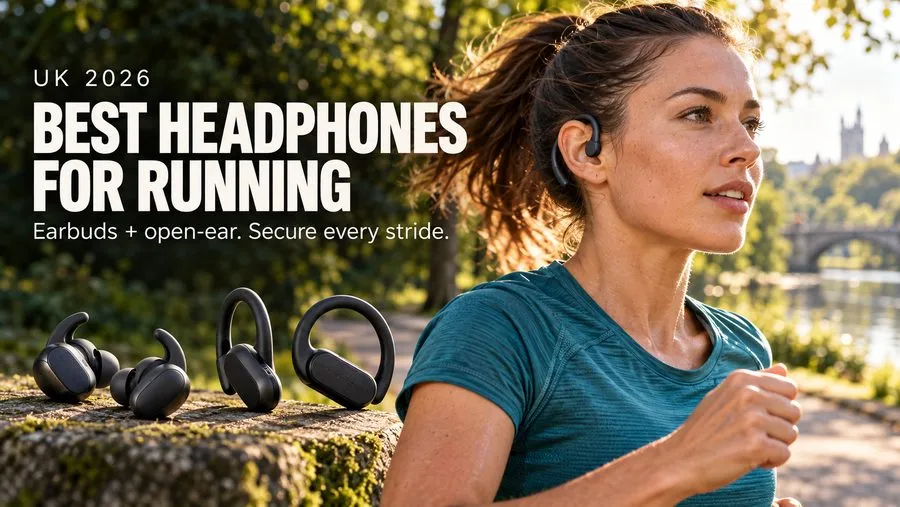
The best headphones for running are almost never headphones in the old sense. For runners, the word means earbuds that lock in, or open-ear sets that leave your ears free, because a cup pressed against a sweating head lasts about a mile. Our pick of the best running headphones for UK buyers, updated for 2026, mixes four secure-fit earbuds with two open-ear sets. Every one carries a maker-stated sweat rating of IPX4 or better, runs for at least eight hours on the buds, and is on sale new in the UK today.
1. Beats Powerbeats Pro 2 – best running earbuds overall: ear hooks, physical buttons and a heart-rate sensor. Check price on Amazon UK
2. Apple AirPods Pro 3 – best for iPhone runners who already trust the AirPods fit: IP57 buds and case. Check price on Amazon UK
3. Google Pixel Buds Pro 2 – best for Android and Pixel runners: a twist-to-adjust stabiliser and the lightest bud here. Check price on Amazon UK
4. Soundcore Sport X20 – best budget running earbuds: adjustable hooks, IP68 and twelve hours for under £60. Check price on Amazon UK
5. Shokz OpenRun Pro 2 – best bone-conduction headphones for road running: ears fully open, twelve hours, IP55. Check price on Amazon UK
6. Shokz OpenDots 2 – best open-ear clip earbuds: IP57 buds, ten hours and 6.4 g each. Check price on Amazon UK
👉 The reviews below explain who each pick suits and what it gives up.
Why the best headphones for running are earbuds or open-ear sets
Three runners, three problems. The first has tried a dozen pairs of running earbuds and every one works loose by the second mile. The second killed a set with sweat within a summer and wants a rating that means something. The third runs on roads at dawn and wants to hear the van behind them without turning the music off. Those three situations, not sound quality alone, decide the best earbuds for running, and they are why sports earbuds are a category of their own rather than ordinary buds worn outside.
Every product here passed four tests: a maker-stated sweat rating, a fit design built to stay put, at least eight hours on the buds, and an awareness mode or open design for road safety. The table gives the shape of the list; the reviews give the detail.
| Pick | Type | Sweat and water rating | Buds battery | From |
|---|---|---|---|---|
| Beats Powerbeats Pro 2 | In-ear, ear hooks | IPX4 (buds and case) | Up to 10 h | £199 |
| Apple AirPods Pro 3 | In-ear, five tip sizes | IP57 (buds and case) | Up to 8 h (ANC on) | £200 |
| Google Pixel Buds Pro 2 | In-ear, twist-to-adjust stabiliser | IP54 buds, IPX4 case | Up to 8 h (ANC on), 12 h (off) | £169 |
| Soundcore Sport X20 | In-ear, adjustable ear hooks | IP68 | Up to 12 h (7 h ANC on) | £59.99 |
| Shokz OpenRun Pro 2 | Bone conduction, open ear | IP55 | Up to 12 h | £169 |
| Shokz OpenDots 2 | Open-ear clip | IP57 buds, IP54 case | Up to 10 h | £179 |
The six best running headphones worth buying – UK 2026
1. Beats Powerbeats Pro 2 – the best running earbuds overall
✅ Pros:
- Nickel-titanium ear hooks that Beats designed to stay locked in through hard efforts
- Physical multifunction buttons and volume rockers that work with wet fingers or gloves
- Built-in heart-rate sensors that feed the iPhone Fitness app or Android workout apps
⛔ Con:
- Only IPX4: fine for sweat and rain, but a class below the IP57 and IP68 picks here
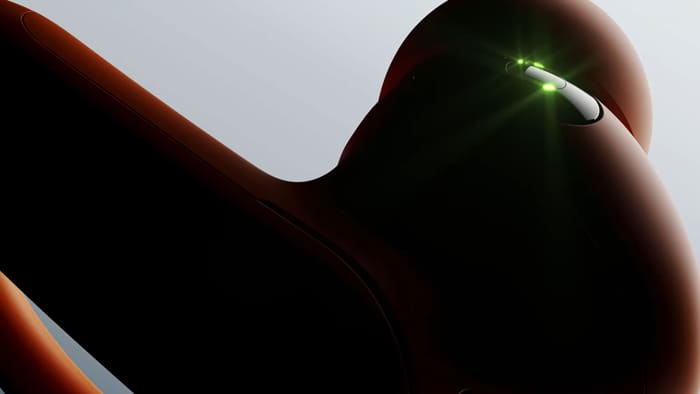
Powerbeats Pro 2 launched in February 2025 and remain the current model [2]. The hook is the fit: Beats rebuilt it in a nickel-titanium alloy chosen for shape memory and flexibility [1]. The hook carries the weight, so the bud needs no deep seal, which suits ears that reject ordinary buds.
The standout feature is heart-rate monitoring. Sensors in each bud read blood flow during a workout; with an iPhone the data appears in the Fitness app, and Android users can pass it to compatible workout apps [1]. For a runner who trains by heart-rate zone but hates a chest strap, that justifies the premium over the Sport X20. Beats quotes up to 10 hours of playback per charge and 45 hours with the case, with a Fast Fuel top-up from a five-minute charge [1]. Each bud weighs 8.7 g, the heaviest earbud here, though the hook carries it [1].
Each side has a physical button plus a volume rocker, so you press rather than tap and sweat cannot trigger a phantom swipe [1]. Noise cancelling handles the gym; Transparency mode is for roads, and Beats itself calls it the mode for a run in the city or cycling in traffic [1].
The compromise is the rating. Beats tested the buds and case to IPX4 under IEC 60529, which covers sweat and splashes for non-water sports, and it warns that resistance is not permanent [1]. That covers British rain, but not a rinse under the tap after a muddy trail; the AirPods Pro 3 and Sport X20 allow that. Powerbeats Pro 2 suit the runner who wants hooks, buttons and heart rate in one set and accepts a case too big for a running belt.
They cost from £199 (Electric Orange; other colours £249). For the full spec sheet and our category scores, see the Beats Powerbeats Pro 2 on ChoiceWise.
2. Apple AirPods Pro 3 – the best pick for iPhone runners

✅ Pros:
- IP57 dust, sweat and water resistance for both the buds and the charging case
- Five foam-infused tip sizes, including XXS, so smaller ears get a proper seal
- Heart-rate sensing during workouts with the iPhone Fitness app
⛔ Con:
- No hook, wing or stabiliser: if AirPods have never stayed in your ears, these will not change that
AirPods Pro 3 went on sale on 19 September 2025 at £219 and are Apple's current in-ear model [4]. They are a conventional stemmed earbud with no hook or wing; the running case rests on the tips and the rating. Apple fused a thin layer of foam into the silicone shell and added an XXS size, five in total, so the seal does the holding [4]. Runners who already know AirPods stay put for them get the most secure AirPods yet; runners whose ears have always ejected AirPods should choose a hooked pick instead.
Only the Sport X20 is rated higher. Apple tested AirPods Pro 3 and the charging case to IP57 under IEC 60529 and names running and HIIT as intended uses [3][4], so a rinse after a wet trail run is within spec. The heart-rate sensor is the standout: infrared light pulsed 256 times a second reads blood flow during a workout and feeds the Fitness app on iPhone [4]. Heart rate, Adaptive Audio, Conversation Awareness and Personalised Volume all need an Apple device [3].
Battery is the trade-off. Apple quotes up to 8 hours with Active Noise Cancellation on, but 6.5 hours when heart-rate sensing runs during a workout [3]. That still covers a marathon, but it is the shortest workout figure in this guide. Each bud weighs 5.55 g, and controls are a press on the stem plus a swipe for volume [3].
Transparency mode is the road setting [3]. The compromise is ecosystem: on Android these become well-sealed IP57 earbuds with none of the extras. For an iPhone runner who wants one pair for commuting and running, they are the obvious answer.
They cost £200. For the full spec sheet and our category scores, see the Apple AirPods Pro 3 on ChoiceWise.
3. Google Pixel Buds Pro 2 – the best running earbuds for Android and Pixel owners
✅ Pros:
- Twist-to-adjust stabiliser that Google says locks the buds in during exercise
- 4.7 g per bud, the lightest of any pick with a published weight
- Wind-blocking mesh over the microphones for clearer calls on exposed routes
⛔ Con:
- Touch controls on the bud surface, which sweat and wet fingers can trigger or miss
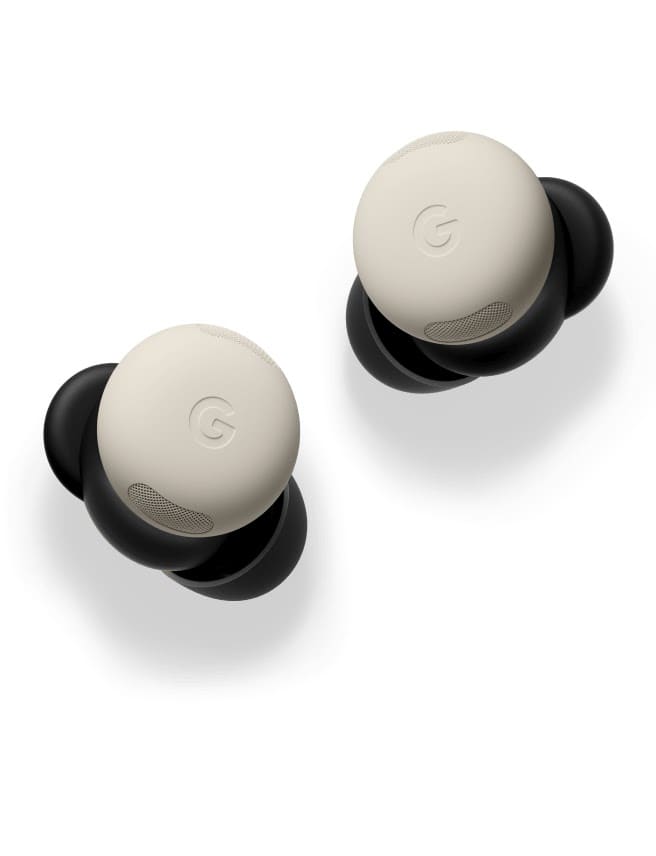
Pixel Buds Pro 2 were announced in August 2024 and went on sale on 26 September 2024 [6]. With no Pixel Buds Pro 3 on sale, they remain Google's current flagship earbud. The fit is their running case. A small stabiliser fin sits at the top of each bud, and Google's own instruction is to twist it into place to secure the buds during workouts, then twist the other way for a relaxed fit afterwards [5]. It is a wing by another name, and with the lowest bud weight here it explains why they hold without a hook.
The rating is IP54 for the buds and IPX4 for the case, tested under IEC 60529 [5]. Read that as sweat and rain protection with a dust rating attached, not something to rinse under a tap. Battery is up to 8 hours with Active Noise Cancellation on and 12 hours with it off, with 30 or 48 hours in total from the case [5]. Outdoors, with cancellation off and Transparency on, the 12-hour figure is the realistic one.
The standout for a Pixel or Android owner is integration: the Tensor A1 chip runs Silent Seal 2.0 noise cancellation, Clear Calling and hands-free Gemini, and the microphones sit under wind-blocking mesh covers [5]. On a coastal or hilltop route that mesh matters more than any codec.
The compromise is control. Pixel Buds Pro 2 use capacitive touch sensors for tap and swipe gestures [5]. On a humid run a drop of sweat can pause a track or a wet finger can fail to register; if you skip tracks a lot mid-run, the buttoned picks are better. On an iPhone they work as plain Bluetooth earbuds without the Google features, so this pick is squarely for Android.
They cost from £169 (Moonstone; other colours £209.99 to £219). For the full spec sheet and our category scores, see the Google Pixel Buds Pro 2 on ChoiceWise.
4. Soundcore Sport X20 – the best budget running earbuds
✅ Pros:
- Ear hooks that rotate up to 30 degrees and extend 4 mm to match your ear
- IP68 with Soundcore's SweatGuard sealing, the highest rating in this guide
- Physical buttons and an in-app Wind Noise Cancellation setting
⛔ Con:
- Soundcore publishes no weight for the buds, and noise cancelling cuts battery to about 7 hours
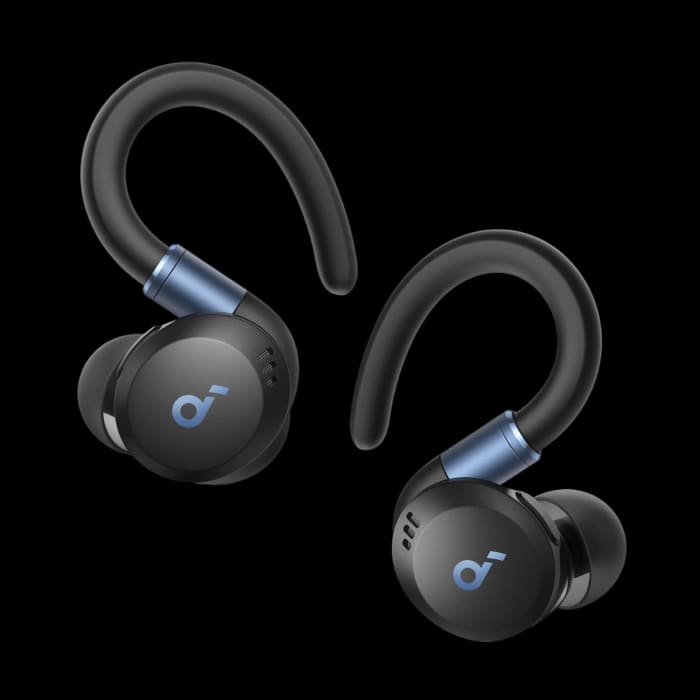
The Sport X20 launched in April 2024 [8] and, with the Sport X10 now listed only as refurbished on Soundcore's UK store, it is the company's current hooked sports earbud. At under £60 it is the cheapest pick here, and it beats the dearer earbuds on two of the four running tests. The hook is adjustable rather than fixed: Soundcore lets it rotate through 30 degrees and extend by 4 mm, so you set where the bud sits rather than hoping the moulding fits [7]. That is an advantage over the fixed Powerbeats hooks for unusual ear shapes.
The rating is IP68, backed by what Soundcore calls SweatGuard, a sealed cavity design against sweat, water and dust [7]. It is the highest rating in this guide and makes a rinse after a muddy run routine. Battery is up to 12 hours per charge in normal mode and 48 hours with the case; Soundcore's own FAQ puts it at about 7 hours with noise cancelling on and 11.5 hours in normal mode at half volume [7].
The standout is weatherproof control. Each bud has a physical button: a single press answers a call, a two-second hold cycles between noise cancelling, normal and Transparency modes [7]. The app adds a Wind Noise Cancellation switch that lowers microphone gain when wind is detected, and Soundcore suggests running with cancellation off if wind buffeting bothers you [7].
The compromises are what £60 buys: no stated per-bud weight, more reliance on the app, and no heart-rate sensor. Buy it for a hooked, rinseable training pair without spending £200, or as a dedicated sweat set beside premium buds. Avoid it if the buds must double as your commuting pair.
It costs £59.99 in Black, White or Green.
5. Shokz OpenRun Pro 2 – the best bone-conduction headphones for running
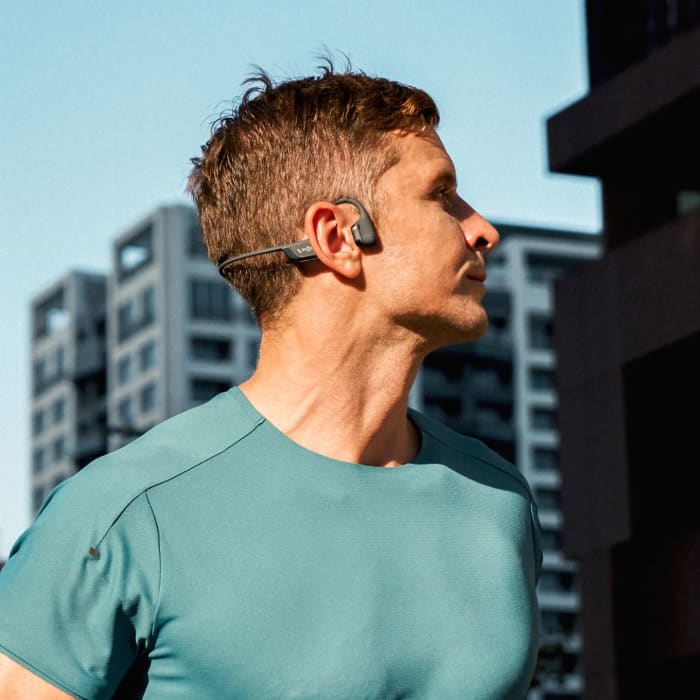
✅ Pros:
- Nothing in your ears: full awareness of traffic, bikes and other runners
- Up to 12 hours per charge, and a five-minute charge adds 2.5 hours
- Dual microphones that Shokz rates for clear calls in wind up to 25 km/h
⛔ Con:
- Bass and isolation trail every in-ear pick, and the headband cannot be worn under a helmet strap
Shokz released the OpenRun Pro 2 on 28 August 2024, and two years later it is still the newest bone-conduction running headphone the company sells in the UK; there is no OpenRun 2 [9][10]. A 30.3 g nickel-titanium band rests transducers on your cheekbones and sends sound through bone to the inner ear, and Shokz's DualPitch design adds small air-conduction drivers for the low end, so this generation sounds fuller than earlier bone-conduction sets [9][10].
The standout is safety. Your ear canals stay open, so a car, a shout or a cyclist's bell arrives at normal volume with no processing in between, which no transparency mode matches. For anyone running on unlit roads or shared paths, that is the decisive argument.
The rating is IP55 under IEC 60529, which Shokz describes as resistance to sweat and water splashes for non-aquatic sport, adding that the protection can fade over time [9]. Battery is up to 12 hours of playback, joint-longest here with the Sport X20, and a five-minute Quick Charge gives 2.5 hours [9]. Controls are physical: a multifunction button and volume buttons [9]. The memory-wire band comes in Standard and Mini sizes, and Shokz's wind claim is specific: dual microphones for clear voice pick-up in wind up to 25 km/h [9][10].
The compromise is sound. Bone conduction cannot match an in-ear pick for bass or isolation, at high volume the transducers buzz on your cheeks, some sound leaks in a quiet room, and the band does not fold. Buy it if awareness comes first or in-ear buds make your ears sore; avoid it if you want gym-level bass or noise-cancelling commuter buds.
It costs £169 in Black, Orange or Silver, in Standard or Mini band sizes.
6. Shokz OpenDots 2 – the best open-ear clip earbuds for running

✅ Pros:
- IP57 buds in an open-ear design, the only pick here to combine the two
- 6.4 g per bud with a nickel-titanium JointArc clip that Shokz says stays put during workouts
- Pinch controls that work through sweat, plus a case that adds up to 40 hours
⛔ Con:
- Shokz states nothing about wind noise, and a clip is less secure than a hook on rough trails
The OpenDots 2 launched on 4 June 2026 and are the newest product in this guide [12]. Each bud is a clip: a ball-shaped speaker at the ear entrance, a barrel-shaped battery behind it, joined by the JointArc, a nickel-titanium plate in soft silicone [11][12]. Shokz's own fit claim is the one that matters here: it says the design stays firmly in place during workouts while keeping you aware of your surroundings [11].
The rating is unusual for a clip-on set: IP57 for the buds and IP54 for the case, so a dust-tight, briefly submersible bud in an open-ear form [11]. Battery is up to 10 hours of music per charge and 40 hours with the case [11]. At 6.4 g per bud they are lighter than Powerbeats Pro 2, and because nothing enters the canal there is no seal to sweat out of [11].
The standout for runners is the control scheme. Shokz uses pinch gestures on the battery barrel: a single pinch or double tap plays and pauses, a double pinch skips tracks, and a pinch-and-hold changes volume [13]. A pinch works with wet or gloved fingers where a touch surface does not. Sound adds Dolby Audio processing and Shokz's leakage-reducing acoustics, with a Private Mode in the app for quiet surroundings [11][12].
The compromise: Shokz says nothing about wind noise, so treat calls on exposed routes as untested, and a clip has less purchase than a hook or band over a stile. Buy it for open-ear awareness in a pocketable, case-charged format; avoid it for rough trails or if you want noise cancelling for the gym.
They cost £179 in Black, Grey or Pearl White. For the full spec sheet and our category scores, see the Shokz OpenDots 2 on ChoiceWise.
How we chose the best running headphones: fit, sweat rating, battery and awareness
Running punishes earbuds on every axis at once: impact, heat, sweat, rain and traffic. Only products that clear all four of these tests made the list.
- A fit design built to stay in. Ear hooks (Powerbeats Pro 2, Sport X20), a stabiliser fin (Pixel Buds Pro 2), a range of purpose-made tips (AirPods Pro 3) or an open-ear frame (OpenRun Pro 2, OpenDots 2). Earbuds that rely on a standard silicone tip alone were not considered, however good they sound.
- A sweat rating the maker states in writing. IPX4 was the floor. IP codes come from IEC 60529: the first digit is dust, the second water, and an X means that element was not tested [14]. IPX4 means splashes from any direction, so sweat and rain; IP55 adds a dust rating and low-pressure jets; IP57 and IP68 mean dust-tight and able to survive immersion, so a rinse under a tap is within spec [14]. The codes do not say two things: every maker here warns that resistance fades with use, and a case is usually rated lower than the buds, or not at all.
- Battery for a long run and the week around it. Eight hours on the buds was the minimum, enough for a marathon with noise cancelling on. The figures makers quote are with cancellation off and volume at half, so read the small print: AirPods Pro 3 drop to 6.5 hours with heart-rate sensing running, and the Sport X20 to about 7 hours with cancellation on [3][7].
- Awareness for road safety. Either a transparency mode that passes outside sound through the microphones, or an open design that never blocks it. The open-ear picks win this test outright; among in-ears, physical buttons decide how easily you can switch modes at a junction.
Two further filters: each pick is the newest model in its line on sale new in the UK, and no brand appears more than twice (Shokz does, for the bone-conduction set and the open-ear clip). Controls mattered more than expected: four of the six use buttons or pinch gestures, and the two touch-controlled picks are the ones to hesitate over in a humid summer.
Comparison table: the six picks side by side
| Best for | Exact model | Key specifications | Key strength | Main limitation | Typical UK buyer |
|---|---|---|---|---|---|
| Running earbuds overall | Beats Powerbeats Pro 2 | Ear hooks, IPX4, 10 h buds / 45 h case, 8.7 g, buttons, heart rate | Hooks plus heart-rate data without a strap | IPX4 only; large case | Zone-training runner on iPhone or Android |
| iPhone runners | Apple AirPods Pro 3 | Five foam-infused tips, IP57 buds and case, 8 h ANC on, 5.55 g, press controls, heart rate | Highest-rated everyday earbud | No hook or wing; features need Apple | iPhone owner whose AirPods already stay in |
| Android and Pixel runners | Google Pixel Buds Pro 2 | Twist-to-adjust stabiliser, IP54 buds / IPX4 case, 8 h ANC on / 12 h off, 4.7 g, touch | Lightest bud, wind-blocking mics | Touch controls in the wet | Pixel or Android owner who runs and commutes |
| Budget | Soundcore Sport X20 | Adjustable hooks, IP68, 12 h / 48 h, weight not stated by Soundcore, buttons | Top rating and battery for under £60 | No heart rate; app-dependent | Anyone wanting a dedicated sweat pair |
| Bone conduction, road safety | Shokz OpenRun Pro 2 | Bone conduction band, IP55, 12 h, 30.3 g, buttons, Standard or Mini | Ears fully open; 5-min charge for 2.5 h | Least bass; no case | Road and trail runner who puts awareness first |
| Open-ear clip | Shokz OpenDots 2 | Clip-on open ear, IP57 buds / IP54 case, 10 h / 40 h, 6.4 g, pinch controls | Open ear with an IP57 rating | No wind-noise claim; clip on rough trails | Runner who wants open ears in a pocketable case |
The decisive split is sealed versus open. On pavements with traffic, the two Shokz sets remove the awareness problem at the cost of bass. For gym plus road, a hooked or well-tipped in-ear with a transparency mode covers both, and the phone decides: Powerbeats Pro 2 for either platform, AirPods Pro 3 for iPhone, Pixel Buds Pro 2 for Android. Prices checked on 29 September 2026.
Beats Powerbeats Pro 2: Check price on Amazon UK
Apple AirPods Pro 3: Check price on Amazon UK
Google Pixel Buds Pro 2: Check price on Amazon UK
Soundcore Sport X20: Check price on Amazon UK
Shokz OpenRun Pro 2: Check price on Amazon UK
Shokz OpenDots 2: Check price on Amazon UK
What to consider before buying running headphones in the UK
The specification sheet settles fit, rating and battery. These are the ownership questions that decide whether you are still happy in a year.
- Which phone you run with. Heart-rate data from Powerbeats Pro 2 reaches the iPhone Fitness app or Android workout apps, but AirPods Pro 3 heart-rate sensing, Adaptive Audio and automatic switching are Apple-only, and Pixel Buds Pro 2 lose Gemini, Clear Calling and their settings app on iPhone [1][3][5]. The two Shokz sets and the Sport X20 are platform-neutral.
- Fit type, tested before the return window closes. Hooks and bands do not depend on canal shape; tipped buds need a seal, so try every tip size on a real run within the return period. Clips sit between.
- What the rating covers. Ratings apply to the buds; the case is often lower or unrated (Pixel Buds Pro 2's case is IPX4; Beats and Apple rate case and buds together; Soundcore states no case rating) [1][3][5][7][11]. Wipe a sweaty bud before it goes back in the case.
- Awareness mode versus open ear. A transparency mode works through microphones and a processor; it is good but not the same as an open canal. In the dark or on shared paths, the open-ear picks are the safer choice.
- Battery in the real world. Quoted figures are at half volume with cancellation off; add noise cancelling, heart-rate sensing or a cold morning and expect less.
- Controls in the wet. Buttons (Powerbeats Pro 2, Sport X20, OpenRun Pro 2) and pinches (OpenDots 2) beat touch surfaces once sweat starts.
- Wind noise on calls. Only Shokz (25 km/h, OpenRun Pro 2), Google (mesh mic covers) and Soundcore (an app setting) say anything about it [5][7][10]. If you take calls mid-run on exposed ground, choose one of those three.
- Seller, warranty and returns. Check the live seller, fulfilment, UK warranty and returns terms on the listing before you buy; a pair that fails the fit test needs to go back quickly.
- Consumables and care. Tips wear and stretch. Rinse only the picks rated for it, dry the charging contacts, and remember every maker here says water resistance degrades with use.
If sleep is the other end of your day, the same seal-versus-open trade-off runs the other way, and our guide to the best wireless earbuds for sleeping in the UK explains why the quietest buds for bed are the wrong ones for the road.
Frequently asked questions about running earbuds and headphones
Which earbuds don't fall out when running?
The running earbuds that stay in are the ones with something other than the ear canal doing the holding. Ear hooks are the most reliable: Powerbeats Pro 2 and the Sport X20 hang the weight over the ear, so the bud only needs to rest at the canal rather than seal it. A stabiliser fin does a similar job from inside the bowl of the ear, which is how the Pixel Buds Pro 2 stay put at 4.7 g. Tip-only designs such as AirPods Pro 3 depend entirely on the seal, which is why Apple ships five sizes; if the right size exists for you they hold, and if it does not they will not. Open-ear sets sidestep the question, since a band or a clip cannot fall out of a canal it never entered. If you have given up on the best earbuds for running because every pair works loose, start with a hook.
Are over-ear headphones good for running?
Generally not. Over-ear cups trap heat, bounce with every stride, and soak the pads with sweat that most makers do not rate them to survive. Very few over-ear headphones carry any IP rating at all, and their weight pulls the band down on a long run. They also block traffic noise more completely than a runner should accept on roads. The exception is a treadmill, where heat and bounce matter less; outdoors, earbuds or an open-ear set are the right form.
Bone conduction or open-ear clip earbuds: which is better for running?
Both leave your ear canals open. Bone conduction (OpenRun Pro 2) sends sound through your cheekbones from a band that cannot fall out, gives the best awareness of the two, and offers the longest battery at 12 hours, but it has the least bass and does not pack small. Open-ear clip earbuds (OpenDots 2) sit at the ear entrance with an air-conduction speaker, so they sound fuller and charge in a pocket-sized case, and the IP57 rating is higher than the band's IP55; the trade is a clip that has less grip on rough ground and no stated wind-noise handling. Choose the band where awareness is the whole point; choose the clips for open ears in an earbud format you can also wear to the office.
IPX4 vs IPX7: can I run in the rain with these?
Yes to all six in rain; the difference is what happens afterwards. IPX4 (Powerbeats Pro 2, and the case of the Pixel Buds Pro 2) means splashes from any direction, which covers sweat and steady rain but not a rinse under a tap [14]. IPX7 and the 7 in IP57 mean the bud survives immersion in up to a metre of water for 30 minutes, and the 8 in IP68 goes further, so AirPods Pro 3, OpenDots 2 and the Sport X20 can be rinsed after a muddy run [14]. Whatever the rating, dry the buds before they go in the case, and expect the protection to weaken over time, as every maker here states.
Final verdict: the best headphones for running in 2026
Back to the three runners. The one whose buds always work loose should buy the Beats Powerbeats Pro 2: hooks, buttons and heart-rate data make them the best running earbuds overall for either phone. The one who killed a pair with sweat should look at the IP57 and IP68 picks, which means AirPods Pro 3 for an iPhone, the Sport X20 for a budget, or the OpenDots 2 for open ears. The one who runs on roads at dawn should stop reading and buy the Shokz OpenRun Pro 2.
- Beats Powerbeats Pro 2 – best running earbuds overall. Check price on Amazon UK
- Apple AirPods Pro 3 – best for iPhone runners whose AirPods already stay in. Check price on Amazon UK
- Google Pixel Buds Pro 2 – best for Android and Pixel runners. Check price on Amazon UK
- Soundcore Sport X20 – best budget running earbuds. Check price on Amazon UK
- Shokz OpenRun Pro 2 – best bone-conduction headphones for road running. Check price on Amazon UK
- Shokz OpenDots 2 – best open-ear clip earbuds. Check price on Amazon UK
Whichever you choose, test the fit on a real run inside the return window and treat the quoted battery as a fair-weather figure. Five of the six launched more than a year ago and remain their makers' current models, so a price drop is likelier than a replacement; only the OpenDots 2 is new this summer.
By ChoiceWise