Best Anti-Glare TVs for Bright Rooms UK 2026
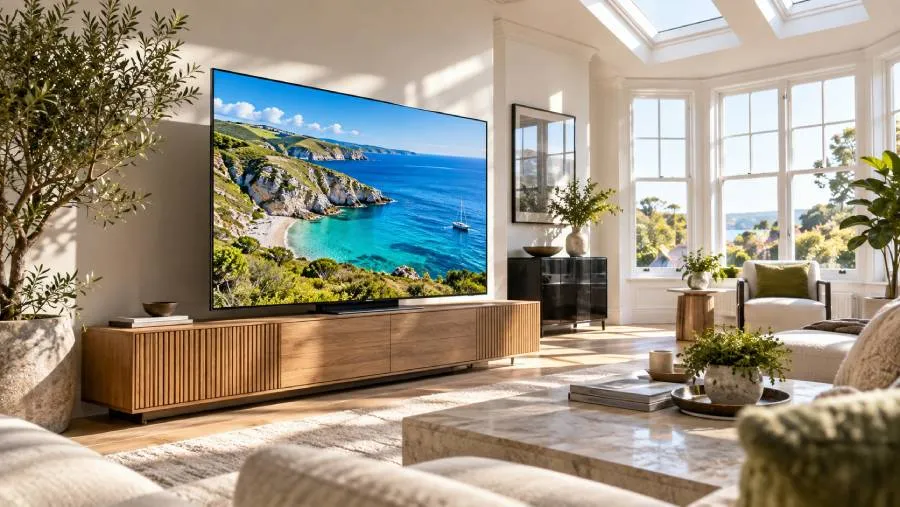
Four TVs that fight back against window glare and lamp reflections, picked from UK retailer specification sheets rather than marketing copy — because 'bright room friendly' turns out to mean something different at every brand. Samsung's QE65S90H carries the strongest evidence of the four: an independently UL-Verified 'Glare Free' screen. LG's OLED65G56LS backs a near-identical certified claim at a lower price. TCL's 55A400PRO puts a genuine matte, anti-glare coating within reach of a tight budget. And Hisense's 75U8QTUK pairs a confirmed anti-reflective screen with the highest stated peak brightness of the four — 5,000 nits — on the biggest screen for the money.
- Samsung QE65S90H — Best OLED for a bright room — 👉 Check price at Hughes
- TCL 55A400PRO — Best value matte-screen pick — 👉 Check price at Hughes
- LG OLED65G56LS — Best OLED for colour accuracy in daylight — 👉 Check price at PRC Direct
- Hisense 75U8QTUK — Best big-screen pick for a bright room — 👉 Check price on Amazon UK
👉 Read on for what each screen's anti-glare claim means, and exactly where the numbers stop.
What stops TV glare in a bright room
Two different strategies show up across these four TVs, and it's worth telling them apart before comparing the actual models.
- An anti-reflective (anti-glare) coating — a physical treatment on the front of the panel that scatters or absorbs incoming light before it can bounce back as a clear mirror-image of your window or lamp. Samsung calls its version 'Glare Free' and has it independently tested to the Unified Glare Rating (UGR) standard [1]; LG's G-series carries its own UL/TÜV-certified 'reflection-free screen', tested to the IDMS 11.5 Ring-light Reflection standard at up to 500 lux of ambient light [3] — bright, daytime-living-room conditions, not a dim test booth. TCL describes its version as a 'nanocrystal anti-glare coating' on a matte panel [5].
- Raw peak brightness, measured in nits (candela per square metre) — simply pushing out enough light that a reflection stops being noticeable next to the picture itself. Hisense states 5,000 nits for the 75U8QTUK on its 'Anti-Reflection PRO' screen [7], combining both approaches at once.
Not every manufacturer publishes a nits figure — Samsung and LG state neither number for these two models, leaning entirely on their certified coatings instead. That's a genuine gap in what a shopper can compare, not an oversight on our part, and this guide says so plainly rather than guessing a number. Part of the reason is that there's no single, universally agreed way to measure or report peak brightness across the industry — a figure can be quoted for a small highlight window, a full-screen sustained reading, or an HDR peak, and manufacturers rarely say which. TCL and Hisense's stated 5,000-nit figures are useful precisely because they're published at all, but treat them as a directional signal of a bright panel rather than a lab-verified, directly comparable number against a rival brand's own claim.
This is also where OLED's structural weak spot shows up. An OLED panel's self-emissive pixels give it the deepest blacks and best off-axis colour of any TV technology, but each pixel is dimmer at its absolute peak than a backlit Mini-LED panel can go — and a glossy front layer with no dedicated coating reflects a window far more visibly than a backlit LCD panel with a diffusing layer in front of it. That's exactly why Samsung and LG's certified anti-glare treatments matter so much for their OLED sets specifically: without one, an OLED TV opposite a bright window is a poor match. A Mini-LED or QD-Mini LED panel, by contrast, can simply out-shine a reflection with sheer brightness even without a special coating — which is exactly the trade-off TCL's flagship models make, and precisely why we ruled out several TVs during our research that had one of these two things but not the other (more on that in the FAQ below).
Why a normal 'best TV' list doesn't help in a bright room
A TV that looks stunning in a darkened showroom, or in a review photographed with the curtains shut, can wash out completely against a south-facing window at 4pm. Picture quality scores and contrast ratios rarely mention it, because most TV testing deliberately happens in controlled, dim conditions. The four TVs below were chosen and checked specifically against that gap: each one either carries a genuine, independently stated anti-reflective coating, a stated peak-brightness figure, or — in Hisense's case — both. Keep reading for exactly what each maker states, what it doesn't, and which pick suits your room and budget.
Top 4 anti-glare and bright-room TVs worth buying – UK 2026
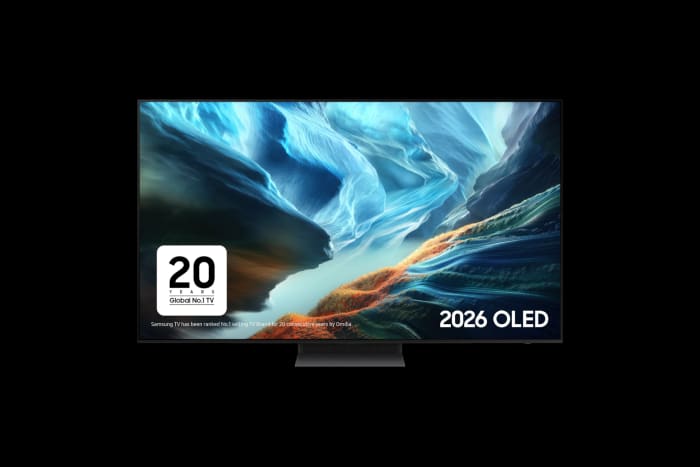
1. Samsung QE65S90H — Best OLED for a bright room
✅ Pros:
- An independently UL-Verified 'Glare Free' screen, tested to the Unified Glare Rating standard (reflection glare UGR under 10) rather than just described as anti-glare in marketing copy
- Genuine OLED self-emissive contrast and per-pixel black levels, so dark scenes stay deep even in a room you can't fully darken
- A 100Hz native panel with VRR up to 165Hz, HDMI 2.1 across all four ports and Wi-Fi 6E for a current gaming and streaming setup
⛔ Con:
- Samsung doesn't publish a peak-brightness figure for this model, so there's no number to compare directly against the Mini-LED sets in this list, and OLED still tops out lower in absolute brightness than a bright backlit panel even with a certified coating helping it along
The QE65S90H's case for a bright room doesn't rest on a marketing adjective — Samsung had the screen tested against the Unified Glare Rating standard and published the certificate (V166045) [1], covering reflection glare, discomfort glare and disability glare separately. That's a stronger claim than an undocumented 'anti-glare' sticker, and it's the reason this is our top OLED recommendation here rather than a cheaper alternative with no such testing behind it. In everyday use that translates into a picture that stays watchable side-on to a window, rather than turning into a mirror the moment the sun moves round.
Where it stays an OLED first and a bright-room TV second is peak output: Samsung has chosen not to state a nits figure for the S90H, which is consistent with how the brand treats its consumer OLED range generally, but it does mean you're trusting the certified glare rating rather than a brightness number when you buy. The NQ4 AI Gen3 processor and Motion Xcelerator panel (100Hz native, VRR to 165Hz) make it a capable gaming display too, with a full set of HDMI 2.1 ports and the Tizen platform's SmartThings integration for anyone already inside Samsung's ecosystem [2].
This is the pick for anyone who wants OLED's colour and contrast in a room that gets strong daylight, and who's willing to trust an independently certified glare rating over a raw brightness spec. Skip it if you want a single number to compare brightness against a Mini-LED set, or if you're in a sun-drenched room and want maximum light output above all else — Hisense's pick below covers that case instead.
2. TCL 55A400PRO — Best value matte-screen pick
✅ Pros:
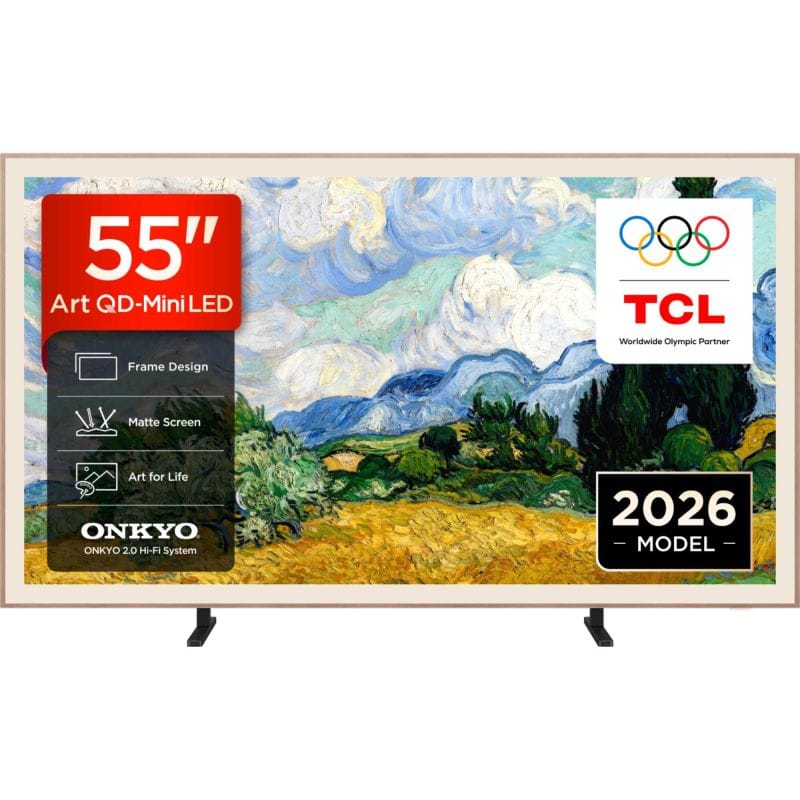
- A genuine matte, nanocrystal anti-glare coating — TCL's own words are that it's designed to 'soften reflections... even in bright rooms', and it's confirmed on Hughes' own spec sheet too
- By far the cheapest TV in this guide, at roughly a third of the Samsung's price
- A surprisingly high 144Hz refresh rate (VRR up to 288Hz) for a TV at this price point
⛔ Con:
- It's the lowest-specified panel of the four on paper, and TCL doesn't state a peak-brightness figure for this model — unlike its own pricier C8L sibling, which does publish 5,000 nits
TCL's A400 Pro range is built around exactly this problem: a QD-Mini LED panel with a matte finish, sold as an alternative to Samsung's own art-style Frame TV but at a fraction of the price. TCL's own product page describes the coating in specific terms — a nanocrystal anti-glare treatment intended to keep the screen legible, and art or photo content looking natural, in bright rooms specifically [5] — and Hughes' own structured spec sheet independently confirms the anti-reflective panel is present [6], which matters given that TCL's own flagship 65C8L, researched for this same guide, turned out not to have one at all despite its headline brightness figure.
What you don't get at this price is a stated brightness number, or the same panel-quality ceiling as the other three TVs here — TCL's cheaper A400 range trades some outright picture performance for the coating and the price tag. The 144Hz refresh rate (with VRR stretching to 288Hz) is an unusual inclusion this far down TCL's range, useful if a games console shares the room, and Google TV keeps the smart-platform experience familiar, with the same Netflix, Prime Video and YouTube apps you'd get on a pricier set. Connectivity is more basic than the other three TVs here — HDMI 2.1 is present but Wi-Fi tops out at the older Wi-Fi 5 standard rather than Wi-Fi 6E, which matters more for streaming a 4K app over a weak home network than for anything glare-related, but is worth knowing before you buy on price alone.
This is the sensible pick for anyone who wants an anti-glare screen without spending OLED money, and who's furnishing a second room or a first flat rather than a dedicated home-cinema space. Skip it if outright picture quality matters more to you than the coating itself — any of the other three TVs here will out-perform it on contrast and detail.
3. LG OLED65G56LS — Best OLED for colour accuracy in daylight
✅ Pros:
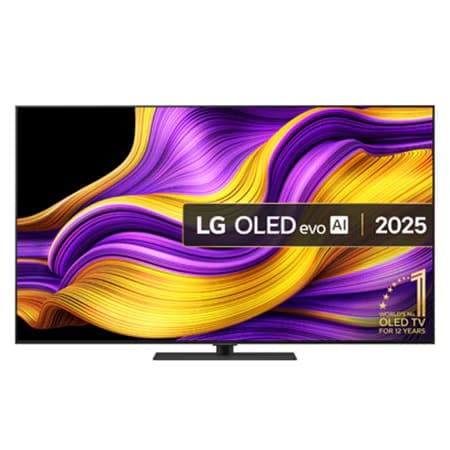
- A UL/TÜV-certified 'reflection-free screen', tested to the IDMS 11.5 Ring-light Reflection standard at up to 500 lux — a bright ambient-light test, not a dim-room claim
- LG's flagship G-series OLED panel and processing, with Dolby Vision Gaming, Nvidia G-Sync and AMD FreeSync all supported across a 120Hz native panel [4]
- Roughly £1,000 cheaper than LG's newly-launched G6 successor, which uses a further-improved glossy anti-reflective coating but currently has no UK retailer offer through ChoiceWise
⛔ Con:
- This exact model has already been superseded by the LG G6, which launched in the UK during 2026 with a new coating specifically aimed at improving bright-room performance further — G56LS remains a current, in-stock model, but it is no longer LG's newest
LG doesn't use the phrase 'anti-glare' on this model's own page, but the underlying claim is the same one Samsung makes for its OLED range: independent laboratory certification of how little a bright room affects the picture. LG's own marketing states that the G56LS delivers '100% Colour Volume and 100% Colour Fidelity certified' viewing on 'a reflection-free screen even in sunlight', backed by UL and TÜV testing to the IDMS 11.5 Ring-light Reflection standard at up to 500 lux of ambient light [3]. That's a real, checkable lab standard rather than a slogan, and it puts LG's flagship G-series OLED alongside Samsung's S90H as the two most rigorously evidenced anti-glare claims in this entire guide.
Worth being upfront about: LG has already moved this series on. The G6, reviewed by TechRadar and RTINGS during 2026, uses 'a new type of glossy screen coating that's meant to improve reflection handling' still further [9], and launched in the UK at roughly £2,999 for the 65-inch size — around £1,000 more than the G56LS costs today, and with no UK retailer offer available through ChoiceWise yet. That makes the G56LS a superseded model in the strict sense, but a perfectly sound one to buy new today: it's still in active UK retail stock, it carries the same certified glare rating in substance, and it undercuts its own successor by a wide margin.
Away from the glare question, the G56LS is also one of the strongest gaming TVs in this guide: a 120Hz native panel with both Nvidia G-Sync and AMD FreeSync variable refresh rate support (rather than just one, as some rival ranges offer), plus Dolby Vision gaming support at 4K120. Four full-bandwidth HDMI 2.1 ports mean a games console, a soundbar and a set-top box can all stay connected at once without swapping cables, and webOS carries the same multi-year software update commitment LG applies across its current OLED range.
Choose this one if you want LG's OLED colour and a certified glare rating without paying flagship-of-flagships pricing. Skip it if you specifically want LG's newest coating generation and can stretch to G6 money — though note that TV isn't yet purchasable through any UK retailer ChoiceWise tracks.
4. Hisense 75U8QTUK — Best big-screen pick for a bright room
✅ Pros:
- A confirmed 'Anti-Reflection PRO' screen — stated on Hisense's own retailer spec sheet [7] and named directly in the product's own Amazon listing title [8]
- The highest stated peak brightness of any TV in this guide: 5,000 nits, matched with a 2000:1 native contrast ratio
- A large 75-inch screen for less money than the smaller LG and Samsung OLEDs here
⛔ Con:
- This exact U8Q tier has already been superseded by Hisense's 2026 UR8S/UR9S RGB Mini-LED range, and its VIDAA smart platform has a noticeably thinner app selection than Google TV, webOS or Tizen
At 75 inches, this is a size class up from every other TV in this guide, and it's the only one here that states both an anti-glare coating and a specific brightness number — 5,000 nits, on a par with TCL's own flagship model, but on a screen with a confirmed reflective-panel treatment that TCL's flagship notably lacks. That combination, plus the biggest screen of the four for £1,599, is exactly why this is the pick if the room gets strong daylight and you want the largest picture your budget allows rather than the most refined one.
It's worth naming plainly why this is the 'big-room' entry rather than a straight size-for-size rival to the 65-inch and 55-inch sets above it: at 75 inches and £1,599, it occupies a different part of the room and the budget to the other three, and it's included here specifically for shoppers who've already decided they want a large screen. Hisense has also already moved on from this generation — its 2026 UR8S and UR9S ranges use a newer RGB Mini-LED backlight [10], and we checked Hisense's own specification data for the closest UR8S model directly before finalising this list: it states no anti-glare or brightness claim of its own at all in Hisense's own structured data, which is exactly why the 75U8QTUK, not its nominal successor, keeps its place here. VIDAA remains the weaker link of the four smart platforms on test, with a smaller native app catalogue than Google TV, webOS or Tizen, though the major UK streaming services are all present. On the hardware side, the 165Hz panel (120Hz native, with VRR stretching further) and a 2000:1 native contrast ratio make it a capable all-rounder beyond the glare question alone, and the 4.1.2-channel, 70W speaker array with Dolby Atmos support means it doesn't strictly need a soundbar in a mid-sized room, unlike the more modest 2.1-channel setups on the two OLEDs above.
Buy this one if screen size and raw brightness matter more to you than the last word in smart-platform polish, and your room fights daylight. Skip it if 75 inches doesn't suit the room, or if VIDAA's smaller app store is a dealbreaker — any of the OLED picks above run a fuller-featured platform.
Comparison table
| Best for | Exact model | Key specifications | Key strength | Main limitation | Typical UK buyer |
|---|---|---|---|---|---|
| Bright-room OLED | Samsung QE65S90H | 65" OLED, 100Hz native (VRR 165Hz), HDMI 2.1 x4, £2,099 | UL-Verified 'Glare Free' coating, UGR under 10 | No stated peak-brightness figure | Picture-quality purists trusting a certified rating over a brightness number |
| Value matte screen | TCL 55A400PRO | 55" QD-Mini LED, 144Hz (VRR to 288Hz), £749 | Genuine matte anti-glare coating at the lowest price here | Lowest overall picture quality of the four; no stated brightness | Budget-conscious bright-room shoppers |
| Daylight colour accuracy | LG OLED65G56LS | 65" OLED, 120Hz native, HDMI 2.1 x4, £1,949 | UL/TÜV-certified reflection-free screen, tested to 500 lux | Already superseded by the pricier LG G6 | LG-loyal buyers wanting flagship OLED colour without G6 pricing |
| Big-room brightness | Hisense 75U8QTUK | 75" Mini-LED, stated 5,000 nits, 165Hz, £1,599 | Highest stated brightness plus a confirmed Anti-Reflection PRO coating | Superseded by 2026's UR8S/UR9S range; smaller VIDAA app store | Large-room shoppers wanting maximum screen and brightness for the money |
The decisive split here comes down to strategy, not brand — which of the two anti-glare approaches suits your room. If daylight is strong but not extreme, Samsung and LG's certified coatings mean an OLED stays watchable. If the room gets direct, sustained sun, Hisense's stated 5,000 nits plus its own coating is the safer bet, and TCL's matte panel is the way in if the budget is tight.
👉 Samsung QE65S90H: check price at Hughes
👉 TCL 55A400PRO: check price at Hughes
👉 LG OLED65G56LS: check price at PRC Direct
👉 Hisense 75U8QTUK: check price on Amazon UK
What to consider before buying
- Coating versus brightness isn't a like-for-like comparison. A certified anti-glare coating (Samsung, LG) and a stated brightness figure (TCL's flagship range, Hisense) solve the same problem differently — neither maker here states both facts on the same model, so don't expect to rank all four on one shared number.
- UK warranty and returns vary by retailer, not just by brand. Prices above are each TV's cheapest in-stock UK offer at the time of writing, split across Hughes, PRC Direct and Amazon UK — check the seller, current price and returns window on the retailer's own page before buying, since affiliate pricing can move day to day.
- Room placement still matters more than any spec. Even a certified anti-glare screen performs best angled away from a window rather than directly opposite one; a matte panel like TCL's forgives off-axis placement better than a glossy one without a coating.
- Software longevity differs by platform. LG's webOS and Samsung's Tizen both carry multi-year update commitments on recent flagship ranges; Hisense's VIDAA and TCL's Google TV platform are both actively supported but carry a smaller native app catalogue than the two OLED platforms here.
- A superseded model isn't automatically a bad buy. Both the LG and Hisense picks here have newer siblings on UK sale, but neither newer model is yet available through a UK retailer at a comparable price — buying the current-generation model new, in stock, at today's lower price remains a sound choice.
- If none of these fit the budget or size you need, our separate guide to the best 65-inch OLED TVs under £1,500 covers OLED options at a lower price point, though none of those specific models were checked for anti-glare coatings in this guide.
Frequently asked questions
Does a TV need an anti-glare coating, or is raw brightness enough?
Either can work, but they solve the problem differently, and knowing which one a TV has changes how you should shop for it. A coating like Samsung's Glare Free or LG's reflection-free screen scatters incoming light so a reflection never forms clearly in the first place, which helps at any brightness level and matters most for dark, high-contrast scenes where even a faint reflection is distracting. A high nits figure like Hisense's stated 5,000 simply overpowers a reflection with more light of its own, which is the more effective approach in a room that gets very strong, direct sun for hours at a time. Hisense's pick in this guide combines both; the other three TVs here rely on one or the other, which is exactly why we've grouped them by strategy rather than by brand in the comparison table above.
What does 'nits' mean, and why don't all these TVs list a figure?
A nit is a candela per square metre — a direct measure of how much light the screen can put out at its peak. TCL's flagship range and Hisense both publish a nits figure for the models that state one; Samsung and LG have chosen not to publish one for the OLEDs in this guide, relying on their certified glare ratings instead. We won't invent a number where a maker hasn't stated one, and you should treat any third-party 'estimated nits' figure you find elsewhere online for these two models with healthy scepticism unless it cites an actual lab measurement.
Is OLED a poor choice for a bright room?
Without help, yes — OLED's self-emissive pixels top out dimmer at their absolute peak than a backlit Mini-LED panel, and a plain glossy panel reflects a window clearly, which is exactly the reputation OLED has earned in bright rooms over the years. What changes that picture is a certified anti-glare treatment like the ones Samsung and LG use here, independently tested against ambient-light standards rather than just marketed as glare-resistant. Neither certification claims to match a bright Mini-LED panel for raw daylight punch, but both are specifically designed to stop reflections forming in the first place, which is a different and often more noticeable problem than absolute brightness during normal daytime viewing.
Where's the best place to put a bright-room TV?
Angle the screen away from direct line-of-sight to any window rather than facing it head-on — even a few degrees off-axis makes a real difference to how visible a reflection is. Keep blinds or curtains as a backup even with an anti-glare model, since no coating or brightness figure fully replaces controlling the light source itself. A matte-coated panel like TCL's or Hisense's forgives off-axis daylight and side-on seating better than a glossy screen with no coating at all, which is worth factoring in if your sofa isn't directly opposite the screen.
Final verdict
Samsung's QE65S90H is the strongest overall pick here, because its 'Glare Free' claim is the only one in this guide backed by a full, published UGR certification covering three separate glare measurements — genuine, checkable evidence rather than a marketing adjective, on top of OLED's own colour and contrast strengths.
- Samsung QE65S90H — Best OLED for a bright room — 👉 Check price at Hughes
- LG OLED65G56LS — Best OLED for colour accuracy in daylight, at roughly £1,000 less than its G6 successor — 👉 Check price at PRC Direct
- Hisense 75U8QTUK — Best pick if the room is sun-drenched and size matters more than platform polish — 👉 Check price on Amazon UK
- TCL 55A400PRO — Best pick on a tight budget who still wants a genuine matte screen — 👉 Check price at Hughes
Whichever you choose, verify the live price, seller and stock on the retailer's own page before buying — affiliate pricing moves, and none of the figures above are guaranteed to hold beyond the day this guide was checked.
By ChoiceWise