Best 65-Inch TVs Under £1,000 UK 2026: Cinema-Quality Picture Without the Premium Price
A thousand pounds is an awkward budget for a 65-inch TV in 2026. It is far more than the sub-£500 sets that top the sales charts, yet still short of where 65-inch OLED starts, so the shopper is left choosing between last year's big-name mini-LED and this year's newcomers without a clear answer. This guide, updated for 2026, resolves it: four mini-LED and Neo QLED sets from four brands, each in stock new in the UK under the cap at the time of writing, ranked on the things that decide whether a film looks like cinema or like daytime telly — dimming zones, native refresh rate, HDR format support, sound and running cost.
- Samsung QN70F — Best all-round 65-inch TV under £1,000 — 👉 Check price on Amazon UK
- TCL 65A400M — Best picture for the money — 👉 Check price at Hughes
- Hisense 65U7QTUK — Best value with the best built-in sound — 👉 Check price on Amazon UK
- LG 65QNED87B6A — Newest generation and the best smart platform — 👉 Check price at Hughes
👉 Read on for what each set does well, what you give up, and which one suits your room.
Why the best 65-inch TV under £1,000 is a mini-LED, not an OLED
Search for the best 65-inch TV and the results push you towards OLED. At this size, though, the cheapest current OLEDs from LG and Samsung sit comfortably above £1,000, and the two 65-inch OLEDs Hughes and PRC Direct stock were listed at £1,399 and £1,499 when we checked. If your ceiling is a firm £1,000, OLED is off the table unless you wait for a clearance deal, and a clearance model is a gamble on stock and support.
The good news is that the technology one rung down has closed most of the gap. Mini-LED backlights with hundreds of independently dimmed zones, quantum-dot colour and native 120Hz or 144Hz panels are now standard at this price from Samsung, TCL, Hisense and LG. Our four picks are all that kind of set. If you can stretch the budget, our guide to the best 65-inch OLED TVs under £1,500 covers the next step up; if £1,000 is the line, the rest of this guide shows how to spend it well.
What separates a cinema-quality 65-inch TV from a merely big one
Every set here is 4K, smart and HDR-capable. Those words no longer separate good from ordinary. The specifications below do.
- Backlight type and dimming zones. A plain LED TV lights the whole screen from the edge or a handful of zones, so black bars go grey and a candle in a dark scene drags the whole picture up with it. Mini-LED uses thousands of tiny LEDs grouped into zones that dim independently. More zones means tighter control: TCL states up to 448 zones on the 65A400M [2], LG describes Precision Dimming on the QNED87 [4], and Samsung and Hisense both use mini-LED arrays behind quantum-dot layers [1][3]. None of them reaches OLED's per-pixel control, but all four are a different class from edge-lit sets.
- Native refresh rate, not the headline number. Film is 24 frames a second and broadcast is 50, so a native 100Hz or 120Hz panel is what matters for smooth motion. The 144Hz figures on all four boxes apply to PC and console input in game mode. Samsung quotes 100Hz native with Motion Xcelerator 144Hz [1]; TCL quotes a native 144Hz panel with variable refresh from 48 to 288Hz [2]; Hisense and LG both quote 120Hz native with 144Hz available to games [3][4].
- HDR format support. Dolby Vision carries scene-by-scene brightness metadata and is used by Netflix, Disney+ and Apple TV+. The Hisense and LG support it [3][4]; Samsung, as across its whole range, supports HDR10+ and HLG instead [1]. TCL's spec sheet for the A400M lists 4K HDR without itemising formats [2]. For most streaming it makes less difference than the dimming hardware, but it is a difference worth knowing about.
- HDMI 2.1 inputs. A 4K 120Hz signal from a PS5, Xbox Series X or gaming PC needs a full-bandwidth HDMI 2.1 port. Samsung, Hisense and LG fit four [1][3][4]; TCL fits three [2]. If you own a soundbar, one of those ports is usually taken by eARC.
- Sound. Thin TVs have thin speakers. Hisense fits a 2.1-channel, 40W system with a subwoofer and Dolby Atmos and DTS:X decoding [3]; the other three ship 20W stereo systems [1][2][4]. Budget for a soundbar with any of them if film sound matters, but the Hisense goes furthest without one.
- Running costs on the energy label. The EU label lists on-mode power in SDR and HDR. The TCL is the only one of the four rated D in SDR, at 67W [6]; the Samsung, Hisense and LG are all E at 84 to 85W [5][7][8]. Every one drops to G in HDR, so a film night costs more than the news.
The picks that follow are ranked on how well they balance those six factors at their price, not on brand reputation.
Top 4 65-inch TVs under £1,000 worth buying – UK 2026
1. Samsung QN70F (QE65QN70F) — Best all-round 65-inch TV under £1,000
✅ Pros:
- Neo QLED Quantum Mini LED backlight with Samsung's NQ4 AI Gen2 processor, the most refined upscaling of the four
- All four HDMI inputs accept 4K at 144Hz, so a console, a PC and a soundbar never fight over one port
- Tizen is the most complete smart platform here for UK catch-up, streaming and Gaming Hub, and the set is listed with a five-year guarantee
⛔ Con:
- No Dolby Vision — Samsung supports HDR10+ and HLG only, so Netflix and Disney+ fall back to standard HDR10
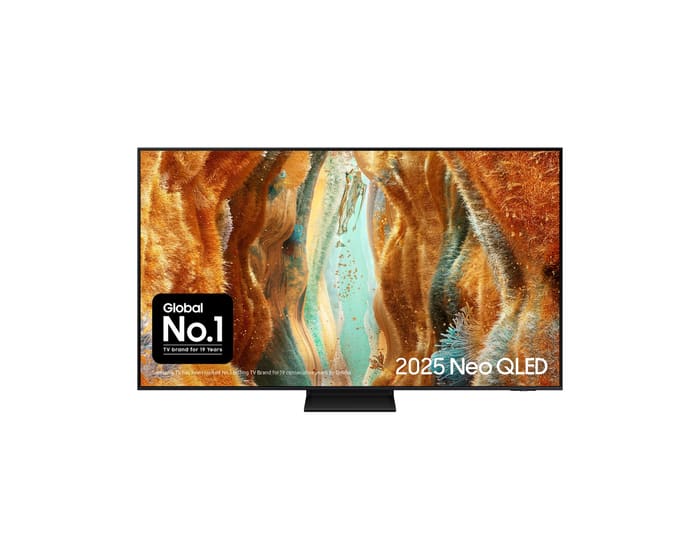
The Samsung QN70F is the entry point to Samsung's 2025 Neo QLED range, and at 65 inches it lands well under the cap. Neo QLED is Samsung's name for a quantum-dot LCD lit by a Quantum Mini LED array, driven here by the NQ4 AI Gen2 processor with 4K AI upscaling and Quantum Matrix Technology Slim for the local dimming [1]. In practice that means the strengths Samsung is known for: sharp, clean upscaling of HD broadcast and older streams, bright, saturated colour, and a picture that stays composed in a lit living room.
The standout feature is the connection panel. Samsung specifies four HDMI inputs, every one capable of 4K at 144Hz, and quotes Motion Xcelerator 144Hz on top of the 100Hz native panel [1]. That combination is unusual under £1,000. A PS5 owner can leave the console on one port, a PC on another, a soundbar on the eARC port and still have a spare, with FreeSync Premium Pro and Gaming Hub for cloud gaming built into Tizen. For a household that games as much as it watches, this is the most future-proof set of the four.
The compromise is HDR format support. Samsung's list runs to HDR10+, HDR10 and HLG, and Neo Quantum HDR for its own processing, but not Dolby Vision [1]. Most people will not notice, because the dimming hardware does the heavy lifting, but if your library is mostly Dolby Vision streams and you have a keen eye for shadow detail, the Hisense or LG give you that format at a similar price. Sound is a 20W Object Tracking Sound Lite stereo system [1], adequate for news and comedy and no more.
On the energy label the QN70F is rated E for SDR at 84W and G for HDR at 189W [5], the highest HDR figure of the four, so a film night on this set draws more than on the TCL. It is also the lightest of the group at 21.8kg with its stand [1], which makes wall-mounting a two-person job rather than a three-person one.
Who should buy it: anyone who wants the safest all-round choice, especially a home with a current-generation console or two. Who should skip it: Dolby Vision loyalists, and anyone who plans to rely on the built-in speakers. UK listings quote a five-year guarantee for this model, the longest here; check the registration terms before you count on it.
2. TCL 65A400M — Best picture for the money
✅ Pros:
- QD-Mini LED backlight with up to 448 dimming zones, the highest stated zone count of the four
- Native 144Hz panel with variable refresh from 48 to 288Hz, the most capable gaming panel under the cap
- The only set here rated D in SDR on the energy label, at 67W — the cheapest to run
⛔ Con:
- A 2 x 10W stereo speaker system and three rather than four HDMI 2.1 inputs
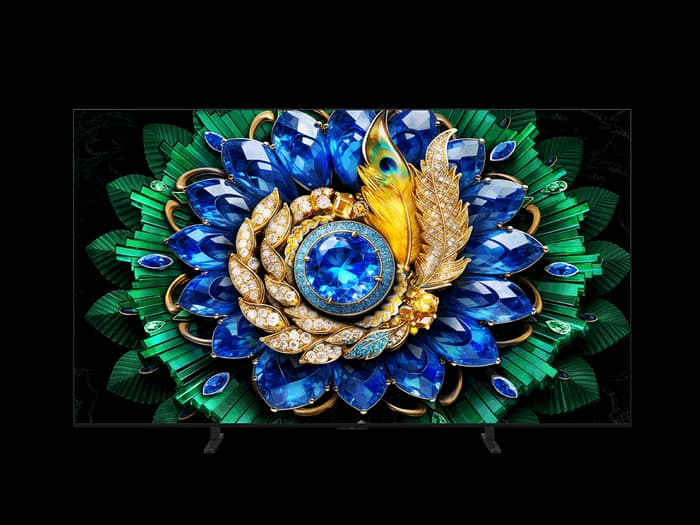
The TCL 65A400M is TCL's 2026 QD-Mini LED for the UK, listed by Hughes at £949 when we checked. It is the pick for the reader whose question is purely about the picture. TCL combines a quantum-dot colour layer with a mini-LED backlight and states up to 448 precise dimming zones on the 65-inch model [2]. More zones mean the backlight can follow the image more closely: subtitles on a black background, a torch in a dark corridor and starfields all stay tighter than on a set with a fraction of the zones. It is the closest any of these four gets to the way an OLED handles contrast.
The panel itself is the other reason it ranks here. TCL specifies a native 144Hz refresh rate, variable refresh from 48 to 288Hz and a 288Hz dual-line mode at 1080p for competitive PC gaming [2]. For film and sport that native rate means the set never has to fake smoothness with heavy processing, and for gamers it is the only true 144Hz native panel in this list. HDMI 2.1 is confirmed on the product page, though TCL fits three HDMI inputs rather than four [2], which is worth knowing if you run a console, a PC and a set-top box alongside a soundbar.
The standout beyond the panel is the running cost. On its EU energy label the 65A400M is rated D in SDR at 67W and G in HDR at 150W [6], against E ratings and 84 to 85W for the other three. Over a year of evening viewing that is a modest saving, but it is the only D-rated 65-inch set in this group, and the lowest HDR draw too.
The compromise is everything that is not the picture. Sound is a 2 x 10W stereo system [2], the weakest on paper here, so a soundbar moves from optional to expected. The spec block does not itemise HDR formats beyond 4K HDR [2], and the smart platform is Google TV, which is excellent for app breadth and voice search but less tailored to UK broadcast than Samsung's or LG's interfaces. TCL lists a two-year guarantee and Wi-Fi 5 with Bluetooth 5.4 [2].
Who should buy it: the film-first viewer who already owns or plans a soundbar, and the PC gamer who wants a native high-refresh panel at 65 inches. Who should skip it: anyone who needs four HDMI 2.1 ports or wants the TV's own speakers to carry a film.
3. Hisense 65U7QTUK — Best value with the best built-in sound
✅ Pros:
- Mini-LED backlight, Dolby Vision IQ, HDR10+ and a stated anti-reflective screen at the lowest price of the four
- 2.1-channel, 40W sound with a built-in subwoofer and Dolby Atmos and DTS:X decoding — the only set here that does not need a soundbar on day one
- Four HDMI 2.1 inputs, 144Hz Game Mode PRO and Freely for aerial-free live TV
⛔ Con:
- The heaviest set of the four at 28.5kg with its stand, on a 400 x 200 VESA pattern, and only a two-year guarantee
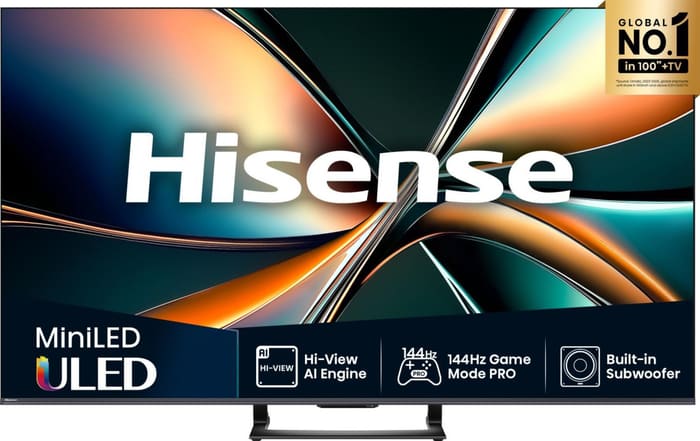
The Hisense 65U7QTUK, the 65-inch U7Q, was the cheapest of the four on Amazon UK when we checked and gives up less than the price gap suggests. It is a mini-LED set with a quantum-dot colour layer, a stated native contrast ratio of 5,000:1 and a 6.5ms response time [3], and it supports the widest HDR list here: Dolby Vision IQ, Dolby Vision, HDR10+, HDR10 and HLG [3]. The panel is 120Hz native with 144Hz Game Mode PRO for consoles and PCs, and all four HDMI inputs are 2.1, one with eARC [3]. Hisense also states an anti-reflective screen [3], which is not a given at this price and matters in a room with a window opposite the TV.
The standout feature is the sound. Hisense fits a 2.1-channel system rated at 40W with a subwoofer, decoding Dolby Atmos and DTS:X [3]. Against the 20W stereo systems on the other three, it is the one set in this group you could live with unaided for a while. Dialogue has more weight, film scores have some body, and the subwoofer gives action scenes a floor the others lack. It is not soundbar-grade, but it postpones the purchase.
VIDAA is Hisense's own platform. It is quicker and plainer than Google TV or Tizen, and it carries the UK essentials: BBC iPlayer, ITVX, Channel 4, 5, Netflix, Prime Video, Disney+, Apple TV and NOW, with Alexa and AirPlay 2 support [3]. The set is also sold as a Freely TV, so it can stream the main UK live channels over broadband without an aerial [9], which suits a flat or a bedroom conversion where the coax socket is in the wrong place.
The compromise is physical and financial rather than in the picture. At 28.5kg with its stand it is the heaviest set here, it uses a 400 x 200 VESA pattern rather than the more common 400 x 400 or 300 x 300, and Hisense lists a two-year guarantee [3]. On the energy label it is rated E in SDR at 84W and G in HDR at 180W [7], in line with the Samsung and LG.
Who should buy it: the buyer who wants the most TV for the least money and does not want to add a soundbar straight away, or who needs Freely. Who should skip it: anyone who cannot lift a 28kg set safely or whose existing wall bracket will not take its VESA pattern.
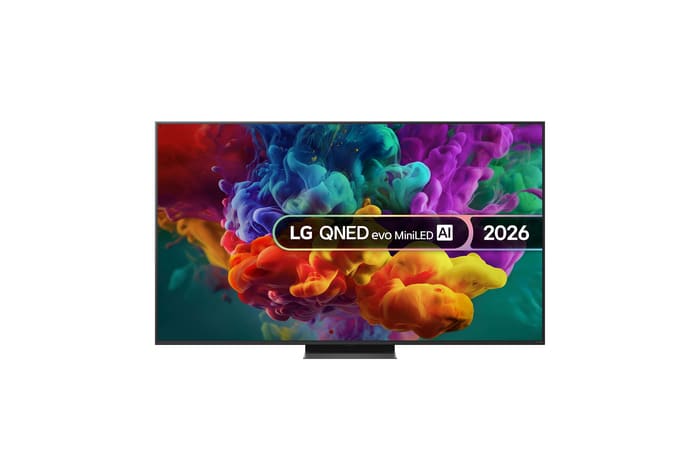
4. LG 65QNED87B6A — Newest generation and the best smart platform
✅ Pros:
- LG's 2026 QNED evo Mini LED with Precision Dimming and the α8 AI Processor 4K Gen3 — the newest hardware in this guide
- webOS 26 with the Magic Remote, Dolby Vision, AirPlay and Google Cast, the friendliest platform of the four
- Four HDMI inputs with 4K 120Hz, VRR, ALLM, QMS and QFT, plus FreeSync and HGiG for console and PC gaming
⛔ Con:
- Sits right at the £1,000 ceiling with a 20W stereo speaker and only a one-year guarantee
The LG 65QNED87B6A is the newest set in this guide, LG's 2026 QNED evo Mini LED, and it was listed by Hughes at £999 when we checked — one pound under the line. QNED is LG's name for a quantum-dot LCD, and this generation pairs it with a mini-LED backlight that LG calls Precision Dimming, driven by the α8 AI Processor 4K Gen3 with Alpha 8 AI Super Upscaling [4]. The panel is 120Hz native with variable refresh up to 144Hz and LG's Motion Booster 288 for high-frame-rate PC gaming [4]. Dolby Vision, HDR10 and HLG are supported [4].
The standout feature is the platform. webOS 26 with the AI Magic Remote is the easiest interface of the four to hand to someone who has never used a smart TV: point-and-click navigation, a full web browser, Multi View, LG Channels and AI voice recognition, with AirPlay and Google Cast for phones from either camp and Works with Apple Home and Google Home for the smart-home side [4]. It is the set we would pick for a household where several people of different ages share the remote.
Gaming is fully covered. LG specifies four HDMI inputs supporting 4K at 120Hz, eARC, VRR, ALLM, QMS and QFT, with FreeSync, HGiG and the Game Optimiser dashboard [4]. That is one step behind the Samsung's 4K 144Hz over HDMI on paper, but for a PS5 or Xbox Series X, which top out at 120Hz, the difference is academic. Bluetooth 5.3 and Wi-Fi 5 handle the rest [4].
The compromise is that you pay for the newest hardware. At the cap there is nothing left for a soundbar, and the built-in system is a 20W stereo pair with Alpha 8 AI Sound Pro virtual up-mixing and Clear Voice Pro [4], which flatters dialogue more than music. LG lists a one-year guarantee, the shortest here [4]. On the energy label it is rated E in SDR at 84.6W and G in HDR at 145W [8], the lowest HDR draw of the four bar the TCL's. At 21.5kg without its stand it is easy to wall-mount on a 300 x 300 VESA plate [4].
Who should buy it: the buyer who wants this year's model rather than last year's, values an easy interface, or wants Dolby Vision on a 2026 set. Who should skip it: anyone who wants change from £1,000 for a soundbar, or who weighs guarantee length heavily.
Comparison table
The decisive differences are the backlight control, the HDR formats and the sound. Everything else is close enough that the price on the day should settle it.
| Best for | Exact model | Key specifications | Key strength | Main limitation | Typical UK buyer |
|---|---|---|---|---|---|
| All-rounder | Samsung QN70F (QE65QN70F) | Neo QLED Mini LED, 100Hz native / 144Hz, 4 x HDMI 4K 144Hz, HDR10+, 20W, energy E / G (84W / 189W) | Four full-bandwidth HDMI ports and Samsung's upscaling | No Dolby Vision; highest HDR power draw | Family living room with a console or two |
| Picture per pound | TCL 65A400M | QD-Mini LED, up to 448 zones, 144Hz native, VRR 48-288Hz, 3 x HDMI 2.1, 2 x 10W, energy D / G (67W / 150W) | Most dimming zones and the only native 144Hz panel | Weakest speakers; three HDMI 2.1 ports | Film-first viewer with a soundbar |
| Value and sound | Hisense 65U7QTUK | Mini-LED, 120Hz native / 144Hz game mode, 4 x HDMI 2.1, Dolby Vision IQ, anti-reflective screen, 40W 2.1ch, energy E / G (84W / 180W) | Built-in subwoofer and the widest HDR support at the lowest price | Heaviest set; two-year guarantee | Budget-first buyer, or a room without an aerial (Freely) |
| Newest and easiest | LG 65QNED87B6A | QNED evo Mini LED, 120Hz native / VRR 144Hz, 4 x HDMI 4K 120Hz, Dolby Vision, webOS 26, 20W, energy E / G (84.6W / 145W) | 2026 hardware and the friendliest interface | At the cap; one-year guarantee | Mixed-age household that wants this year's model |
Samsung QN70F: 👉 Check price on Amazon UK
TCL 65A400M: 👉 Check price at Hughes
Hisense 65U7QTUK: 👉 Check price on Amazon UK
LG 65QNED87B6A: 👉 Check price at Hughes
What to consider before buying
The reviews above cover the picture. These are the ownership questions that decide whether the set you pick still feels like the right one in a year.
- Where the cap bites. Two of these sets are priced comfortably under £1,000 and two sit close to it. Prices at Hughes, PRC Direct and Amazon UK move week to week, so treat the ranking as a guide to what you get for the money and check the live price before you decide. A set that dips £100 under the cap leaves room for a soundbar, which on three of the four you will want.
- Guarantee length varies more than you might expect. UK listings quote five years for the Samsung, two for the TCL and Hisense, and one for the LG. Longer cover usually depends on registering the set within a set period, so read the terms on the day and keep the receipt.
- Seller and fulfilment. On Amazon UK the QN70F and U7Q listings we checked were new and in stock, but the seller of record can change between visits. Confirm the seller, delivery method and returns window before paying; Hughes and PRC Direct sell direct and state their own delivery and returns terms.
- Sound is the hidden cost. Only the Hisense carries a subwoofer. Budget roughly a sixth of the TV price for a soundbar with the Samsung, TCL or LG if film sound matters, and remember that a soundbar takes the eARC HDMI port.
- HDMI budgeting. Count your sources: console, PC, set-top box, Blu-ray player, soundbar. The TCL's three HDMI 2.1 ports are enough for most homes, but a household with two consoles and a soundbar will fill the four on the Samsung, Hisense or LG.
- Weight, stand and wall mount. A 65-inch set is a two-person lift whatever the weight, but 21.8kg with stand (Samsung) and 28.5kg (Hisense) are different jobs. Check the VESA pattern against your bracket: 400 x 300 on the Samsung, 400 x 400 on the TCL, 400 x 200 on the Hisense and 300 x 300 on the LG.
- Running cost. All four are G-rated in HDR, so a Dolby Vision or HDR10+ film costs roughly double the electricity of a news bulletin. The TCL's 67W SDR figure is the lowest here; over four hours a day for a year that is about 98kWh against 123kWh for an 84W set, and you can multiply the difference by your unit rate.
- Software longevity. Tizen, Google TV, VIDAA and webOS all receive app updates for years, but feature updates favour the newest hardware. The LG is the only 2026 set here; the other three are 2025 models that will be superseded within the year, which is usually why they are under the cap.
- Freely and aerials. If the TV is going in a room without a working aerial socket, the Hisense's Freely support lets it stream the main UK live channels over broadband [9]. The others rely on their Freeview and satellite tuners or the broadcasters' apps.
Frequently asked questions
Can I get a 65-inch OLED TV for under £1,000 in 2026?
Not new from a mainstream retailer at the time of writing. The 65-inch LG B5 and C5 OLEDs stocked by Hughes and PRC Direct were listed at £1,399 and £1,499 when we checked, and Samsung's 65-inch S85F was out of stock on Amazon UK. Clearance and refurbished OLEDs do appear under the cap from time to time, but they come with shorter cover and no guarantee of stock. If OLED is the goal, our guide to 65-inch OLEDs under £1,500 is the honest starting point; if £1,000 is the limit, a mini-LED set with a high zone count is the right buy today.
Is mini-LED close enough to OLED for films?
Close enough that most viewers in a normal living room will not miss OLED, and in some ways better. A mini-LED set with several hundred dimming zones, such as the TCL 65A400M with up to 448 [2], produces deep blacks in most scenes and goes brighter than OLED for HDR highlights and daytime viewing. Where OLED still wins is in a dark room with high-contrast content: the outline of a bright object against black, where a zoned backlight can show a faint halo. If you watch mostly at night with the lights off and notice that kind of detail, save for OLED; otherwise the four sets here are the better use of £1,000.
Do I need 144Hz or HDMI 2.1 if I do not play games?
You need the native refresh rate, not the 144Hz headline. Film and broadcast never exceed 60 frames a second, so a 100Hz or 120Hz native panel gives you smooth motion for sport and cleaner film cadence; all four sets here have that [1][2][3][4]. HDMI 2.1 matters for a PS5, Xbox Series X or PC at 4K 120Hz, and for eARC to a soundbar, which is why even a non-gamer benefits from at least one HDMI 2.1 port. The 144Hz and 288Hz modes are for PC gamers and can be ignored otherwise.
What do the E and G energy ratings mean for my bill?
The EU label rates a TV's on-mode power in SDR and in HDR separately. The Samsung, Hisense and LG are E in SDR at 84 to 85W [5][7][8]; the TCL is D at 67W [6]. All four are G in HDR, at 145W to 189W [5][6][7][8], because driving a mini-LED backlight to HDR brightness takes far more power than everyday viewing. Multiply the wattage by your hours and your unit rate: at four hours a day, an 84W set uses about 123kWh a year in SDR, and the TCL about 98kWh. The difference is measurable but small next to the price gap between the sets, so buy on picture and features first and treat the label as a tie-breaker.
Final verdict
The Samsung QN70F is the strongest overall pick: four 4K 144Hz HDMI inputs, Samsung's processing and platform, and a price with room left for a soundbar, with only the missing Dolby Vision counting against it. The rest of the list is about which compromise suits you.
- Samsung QN70F — Best all-round 65-inch TV under £1,000: 👉 Check price on Amazon UK
- TCL 65A400M — Best picture for the money, with the most dimming zones, a native 144Hz panel and the lowest running cost: 👉 Check price at Hughes
- Hisense 65U7QTUK — Best value and the only one with proper built-in sound, plus Dolby Vision IQ and Freely: 👉 Check price on Amazon UK
- LG 65QNED87B6A — The 2026 set with the easiest interface and Dolby Vision, if you can spend the whole £1,000: 👉 Check price at Hughes
Choose the TCL if you already own a soundbar and the picture is all that matters. Choose the Hisense if the budget is tight, the room lacks an aerial, or you want to postpone a soundbar. Choose the LG if the household is mixed-age and you want this year's hardware. Whichever you pick, check the live price, the seller and the guarantee registration terms on the day, and measure the stand footprint against your unit: at 65 inches, every one of these is around 1.45 metres wide.
By ChoiceWise